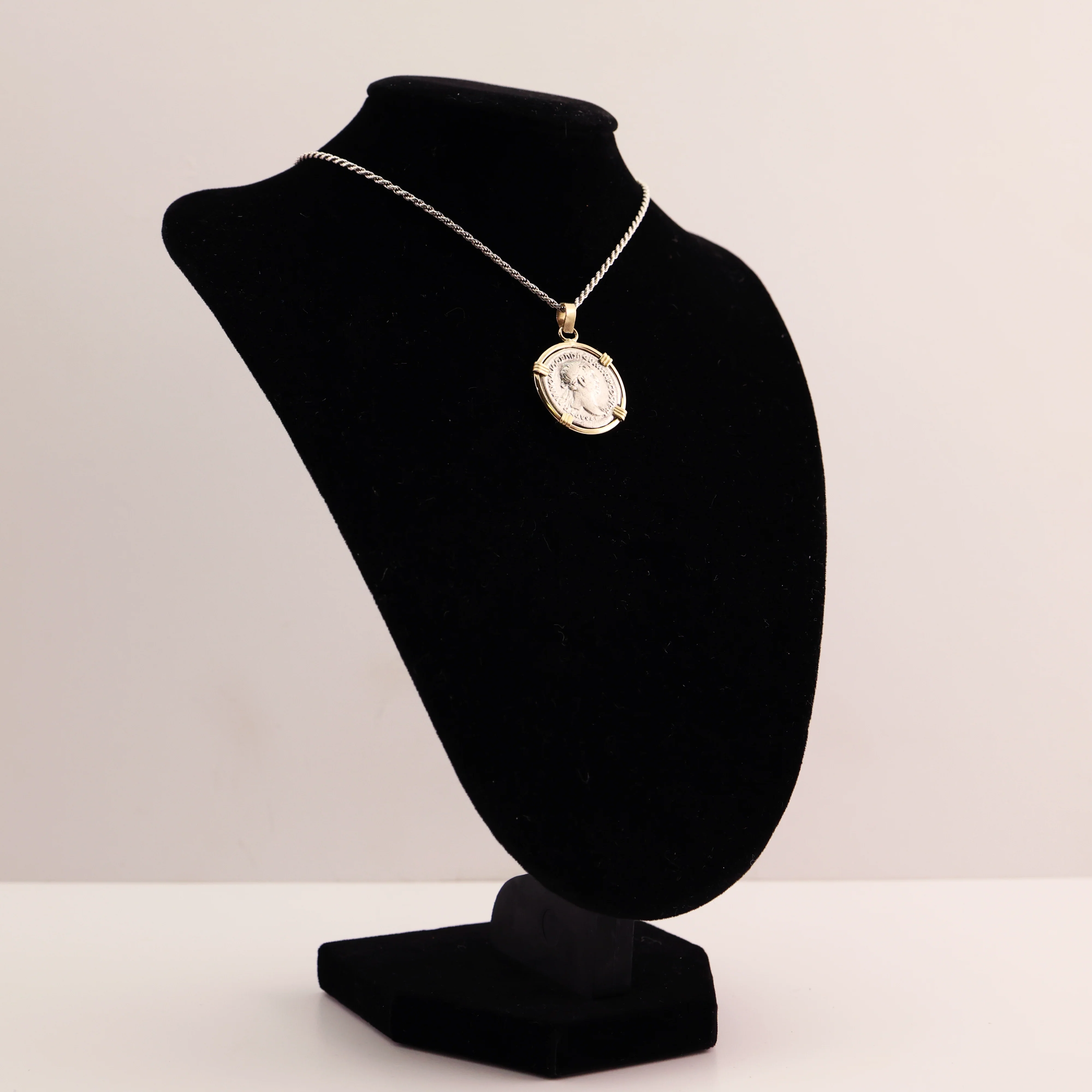
Trajan Silver Denarius
Coin: Silver Denarius
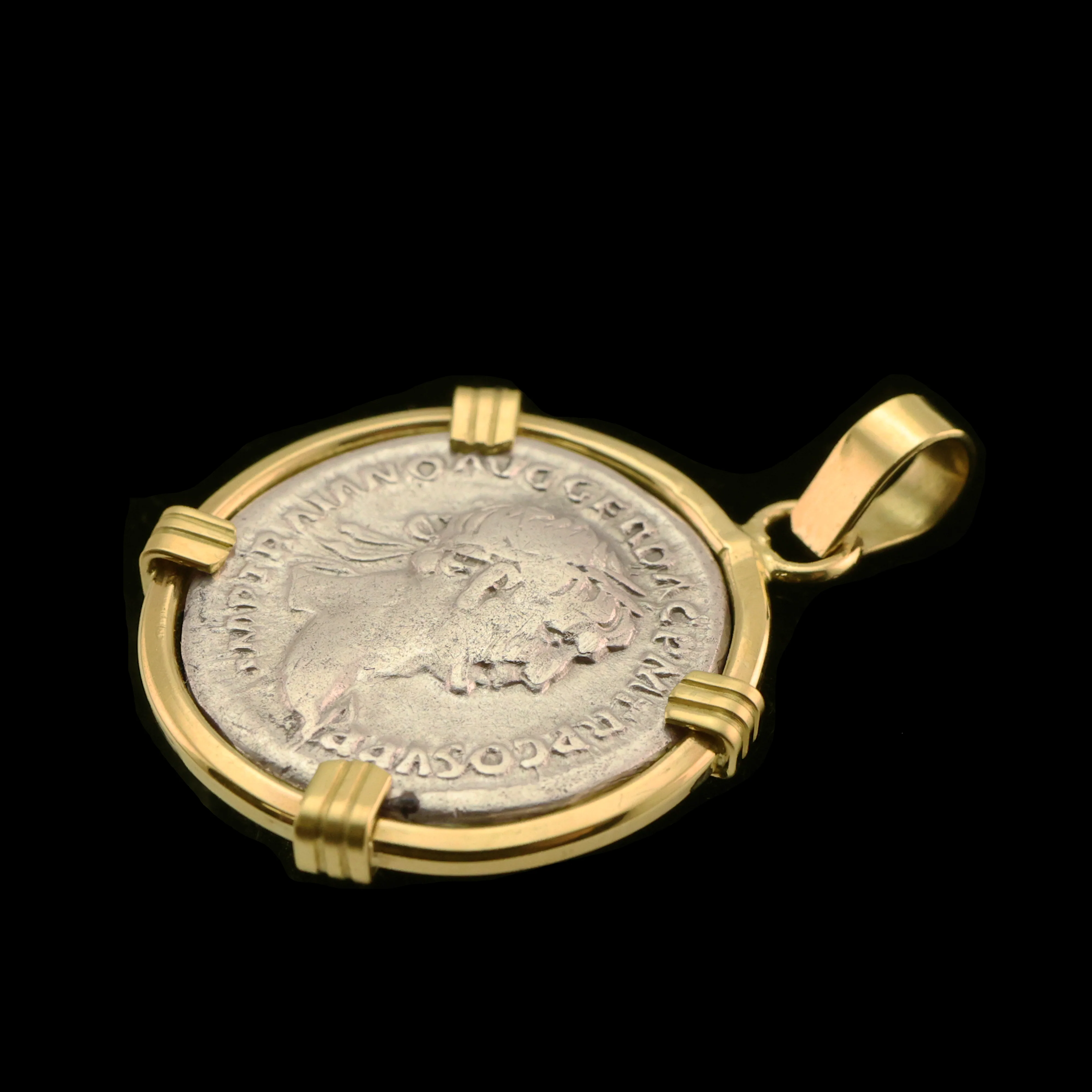
Obverse: Portrait of Emperor Trajan
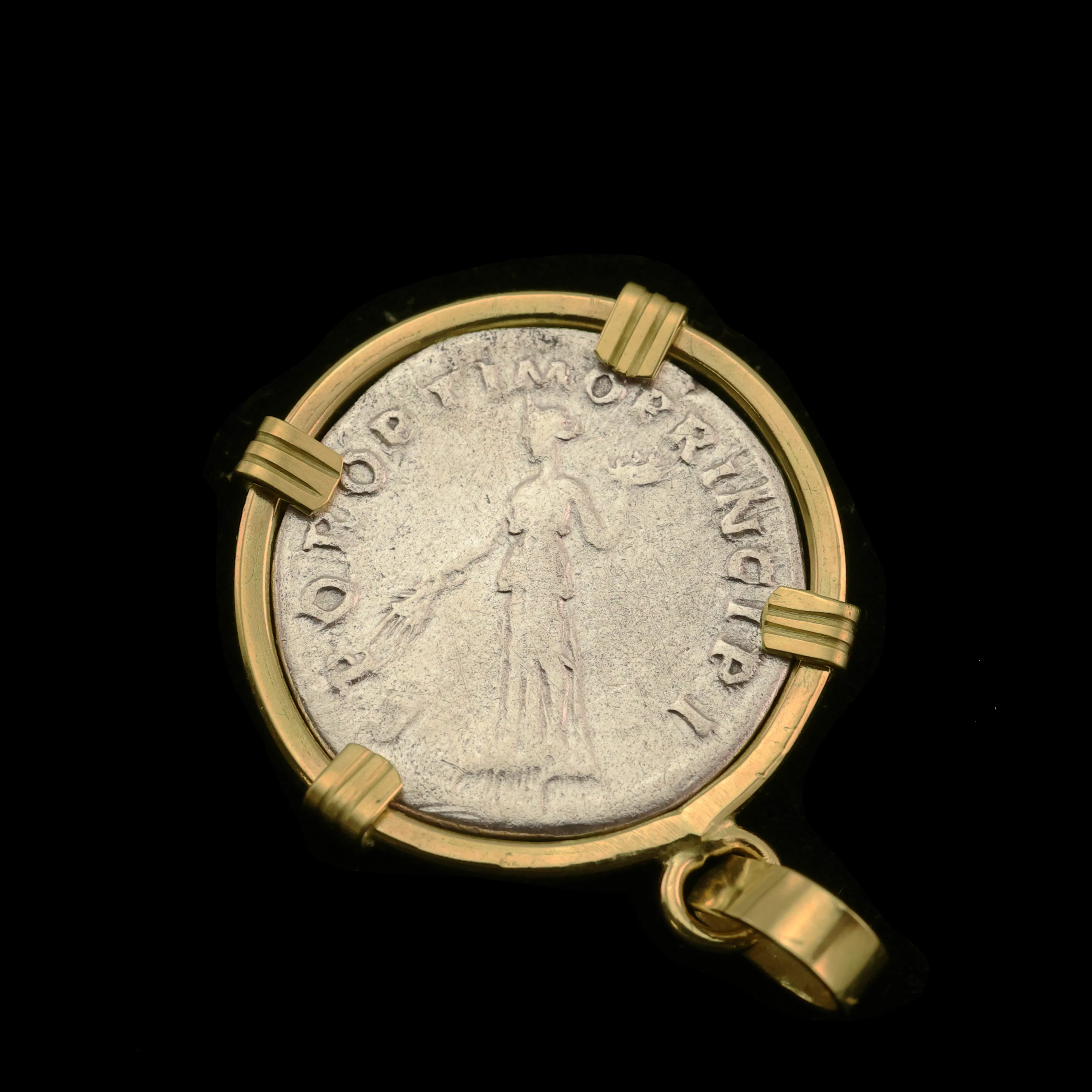
Reverse: Fides, draped, standing left, holding corn-ears downwards in right hand and basket of fruits raised up on left
Date: 103 - 11 A.D.
Bezel: 14k Gold
Weight: 5.08 g
Diameter: 22 mm / .82 in
Description
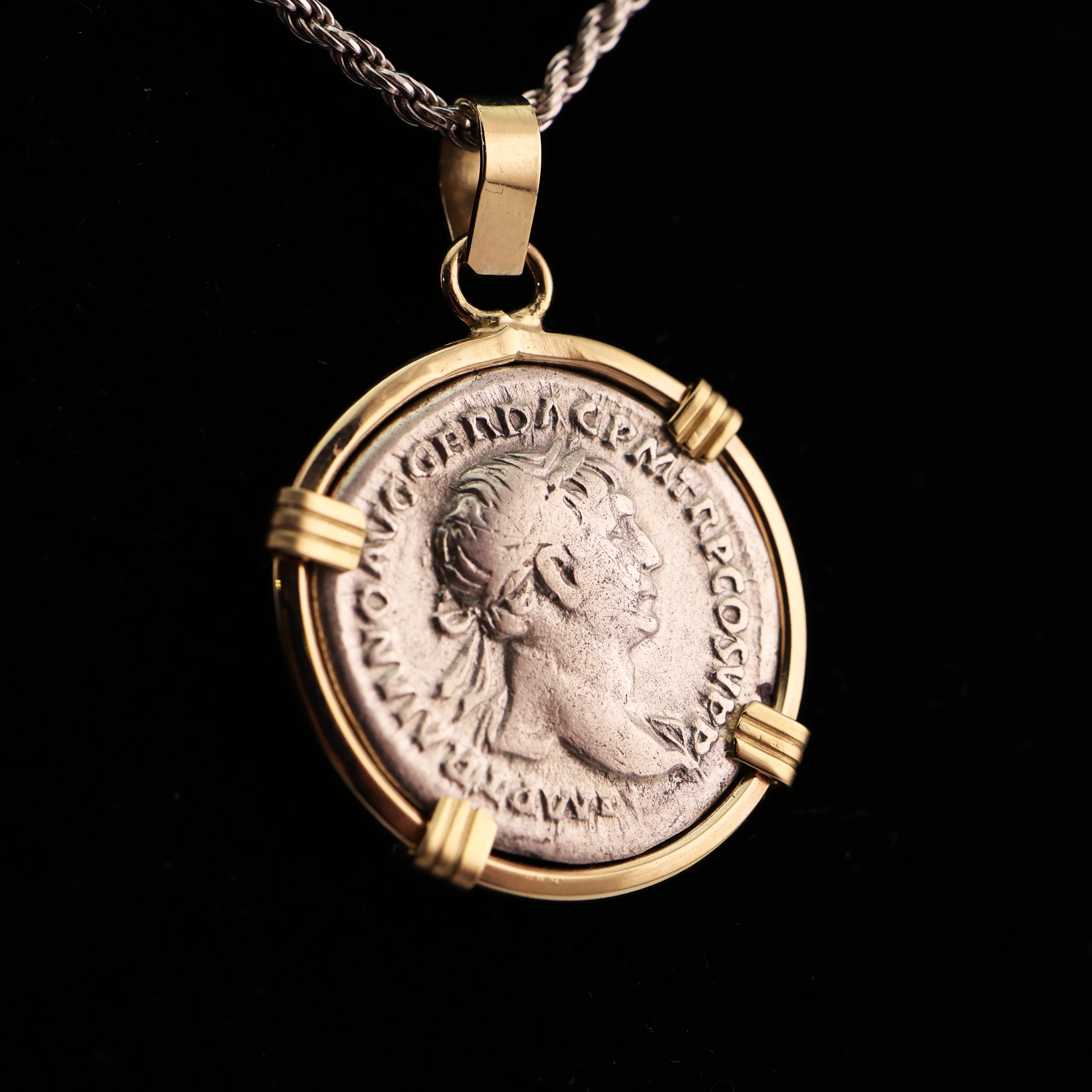
This item is an authentic Roman silver denarius coin, placed in a handmade bezel of Sterling Silver. There is only 1 of this item; you will receive the exact pendant shown in the photos.
Chain necklaces can be purchased separately through this link.
History of the Artifact
The Roman silver denarius during the reign of Emperor Trajan (98–117 CE) was a crucial element of the Roman economy and an important tool for imperial propaganda. Trajan, often regarded as one of Rome’s greatest emperors, utilized the denarius to project his image and communicate his achievements across the vast Roman Empire. The coins of this period reflect Trajan’s military conquests, public works, and his role as a virtuous and capable ruler.
On the obverse of Trajan's denarii, his portrait is depicted with striking detail, emphasizing his strength, determination, and leadership. He is often shown wearing a laurel wreath, a traditional symbol of victory and divinity, accompanied by inscriptions such as “IMP TRAIANO AUG GER DAC P M TR P COS”, highlighting his titles and accomplishments. These inscriptions often referenced his victories in Dacia (modern Romania), one of the most significant military achievements of his reign. The conquest of Dacia brought immense wealth to Rome, much of it in the form of gold and silver, which helped fuel the production of high-quality coins like the denarius.
The reverse side of Trajan's denarii often carried designs that celebrated his military success, public benefactions, and the prosperity of the empire. Common themes included depictions of the goddess Victory crowning a trophy, personifications of provinces like Dacia, or symbols of Rome’s power and stability, such as the eagle and the laurel wreath. Some coins commemorated the construction of monumental projects like Trajan’s Forum and Trajan’s Column, both of which symbolized the glory and ingenuity of Rome under his rule.
Trajan’s extensive use of the denarius also served to connect the far-flung provinces of the empire. As these coins circulated widely, they reinforced a shared Roman identity, carrying the emperor’s image and messages to subjects across Europe, the Middle East, and North Africa. The consistency and trustworthiness of the denarius during his reign reflected his focus on economic stability and governance.
Economically, the denarius of Trajan’s era maintained a high silver content compared to later periods, underscoring the relative prosperity of Rome during his time. The influx of precious metals from Dacia allowed Trajan to finance his ambitious building projects, fund military campaigns, and maintain the Roman welfare system, such as the alimenta, a program that provided food for poor children.
Today, Trajan’s denarii are valued not only for their artistry but also for the historical insights they offer. They provide a tangible link to an era of Roman history characterized by expansion, stability, and monumental achievements, embodying the legacy of an emperor remembered as "Optimus Princeps" (the best ruler).
Authenticity
Ancient Artifacts guarantees the Authenticity of items sold through a three layer system of protection:
- Ancient Artifacts exclusively sources artifacts from trusted and reputable antique distributors, many of whom have been selling Artifacts for decades.
- Next, the Artifact is inspected by an expert team member, who is professionally trained in counterfeit detection After the artifact passes inspection, the Certificate of Authenticity is signed and the Artifact is packaged.
- Finally, Ancient Artifacts gives an additional layer of protection by promising a full refund with no questions asked, in the extremely unlikely event that a counterfeit slips through our vetting process.
Your order will include:
- Hadrian Denarius Pendant shown in photos
- Certificate of Authenticity
Ancient Artifacts relics are guaranteed authentic and have a 100% money back policy. Read more about our Mission and Promise for authenticity.
Original: $760.00
-65%$760.00
$266.00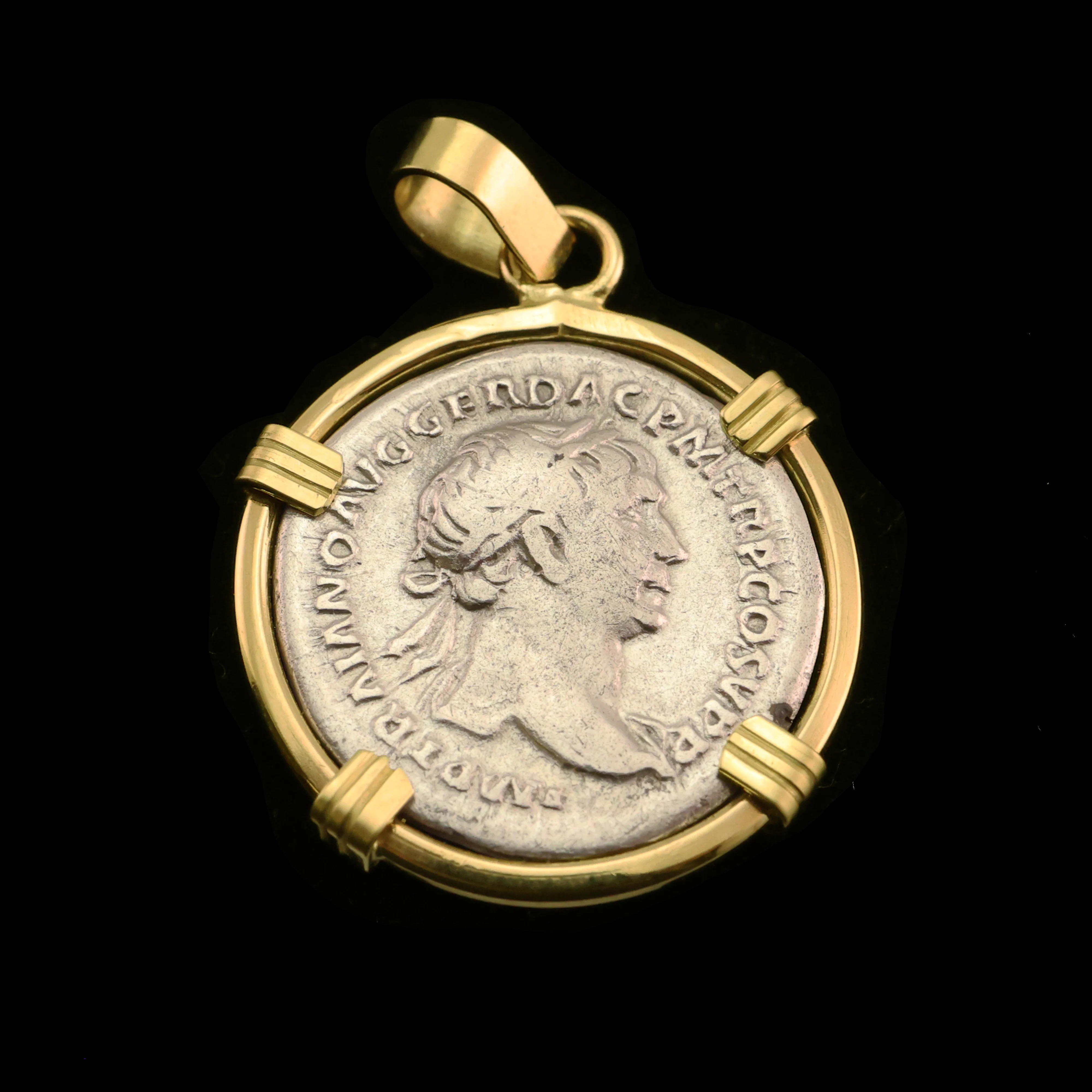
Description
Coin: Silver Denarius
Obverse: Portrait of Emperor Trajan
Reverse: Fides, draped, standing left, holding corn-ears downwards in right hand and basket of fruits raised up on left
Date: 103 - 11 A.D.
Bezel: 14k Gold
Weight: 5.08 g
Diameter: 22 mm / .82 in
Description
This item is an authentic Roman silver denarius coin, placed in a handmade bezel of Sterling Silver. There is only 1 of this item; you will receive the exact pendant shown in the photos.
Chain necklaces can be purchased separately through this link.
History of the Artifact
The Roman silver denarius during the reign of Emperor Trajan (98–117 CE) was a crucial element of the Roman economy and an important tool for imperial propaganda. Trajan, often regarded as one of Rome’s greatest emperors, utilized the denarius to project his image and communicate his achievements across the vast Roman Empire. The coins of this period reflect Trajan’s military conquests, public works, and his role as a virtuous and capable ruler.
On the obverse of Trajan's denarii, his portrait is depicted with striking detail, emphasizing his strength, determination, and leadership. He is often shown wearing a laurel wreath, a traditional symbol of victory and divinity, accompanied by inscriptions such as “IMP TRAIANO AUG GER DAC P M TR P COS”, highlighting his titles and accomplishments. These inscriptions often referenced his victories in Dacia (modern Romania), one of the most significant military achievements of his reign. The conquest of Dacia brought immense wealth to Rome, much of it in the form of gold and silver, which helped fuel the production of high-quality coins like the denarius.
The reverse side of Trajan's denarii often carried designs that celebrated his military success, public benefactions, and the prosperity of the empire. Common themes included depictions of the goddess Victory crowning a trophy, personifications of provinces like Dacia, or symbols of Rome’s power and stability, such as the eagle and the laurel wreath. Some coins commemorated the construction of monumental projects like Trajan’s Forum and Trajan’s Column, both of which symbolized the glory and ingenuity of Rome under his rule.
Trajan’s extensive use of the denarius also served to connect the far-flung provinces of the empire. As these coins circulated widely, they reinforced a shared Roman identity, carrying the emperor’s image and messages to subjects across Europe, the Middle East, and North Africa. The consistency and trustworthiness of the denarius during his reign reflected his focus on economic stability and governance.
Economically, the denarius of Trajan’s era maintained a high silver content compared to later periods, underscoring the relative prosperity of Rome during his time. The influx of precious metals from Dacia allowed Trajan to finance his ambitious building projects, fund military campaigns, and maintain the Roman welfare system, such as the alimenta, a program that provided food for poor children.
Today, Trajan’s denarii are valued not only for their artistry but also for the historical insights they offer. They provide a tangible link to an era of Roman history characterized by expansion, stability, and monumental achievements, embodying the legacy of an emperor remembered as "Optimus Princeps" (the best ruler).
Authenticity
Ancient Artifacts guarantees the Authenticity of items sold through a three layer system of protection:
- Ancient Artifacts exclusively sources artifacts from trusted and reputable antique distributors, many of whom have been selling Artifacts for decades.
- Next, the Artifact is inspected by an expert team member, who is professionally trained in counterfeit detection After the artifact passes inspection, the Certificate of Authenticity is signed and the Artifact is packaged.
- Finally, Ancient Artifacts gives an additional layer of protection by promising a full refund with no questions asked, in the extremely unlikely event that a counterfeit slips through our vetting process.
Your order will include:
- Hadrian Denarius Pendant shown in photos
- Certificate of Authenticity
Ancient Artifacts relics are guaranteed authentic and have a 100% money back policy. Read more about our Mission and Promise for authenticity.