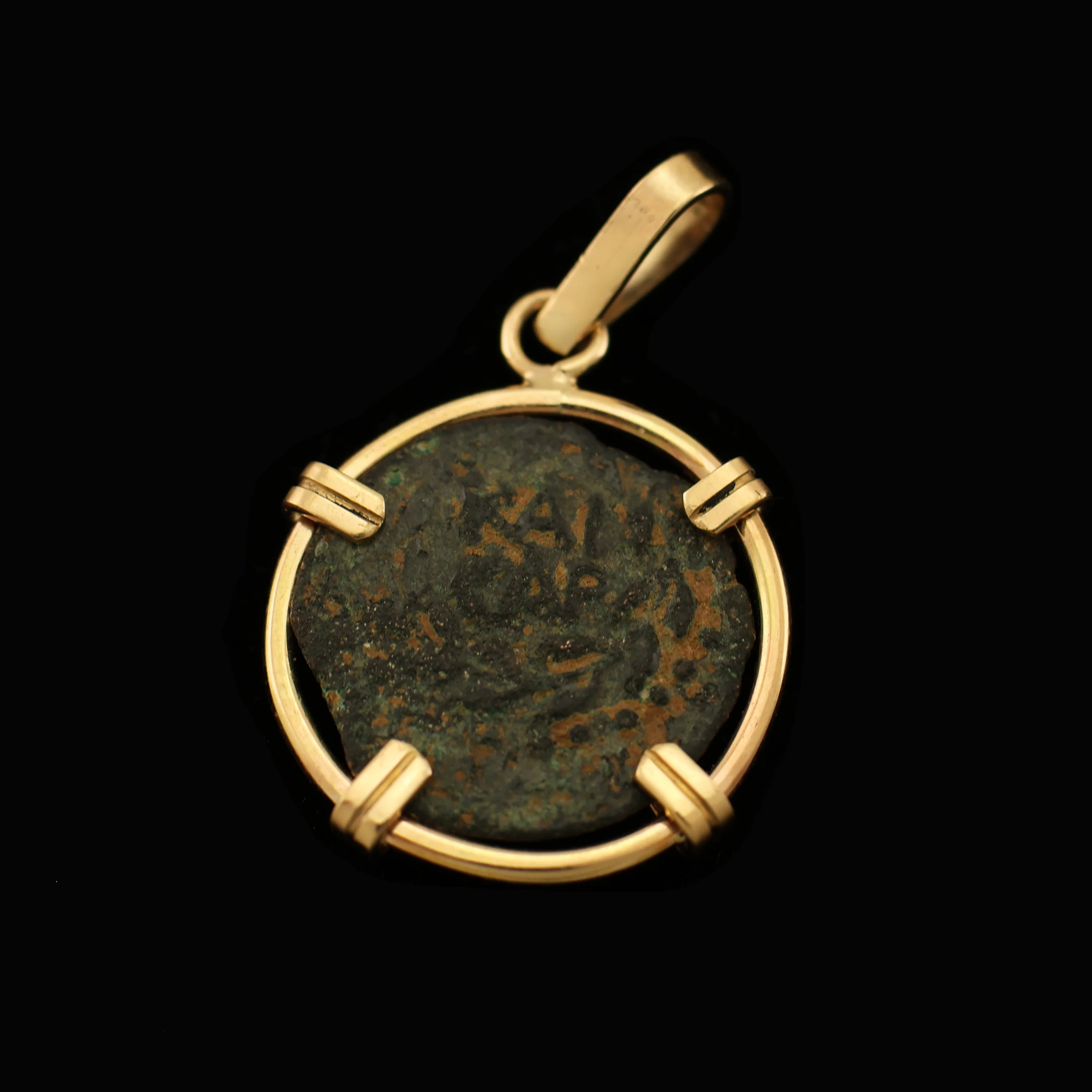
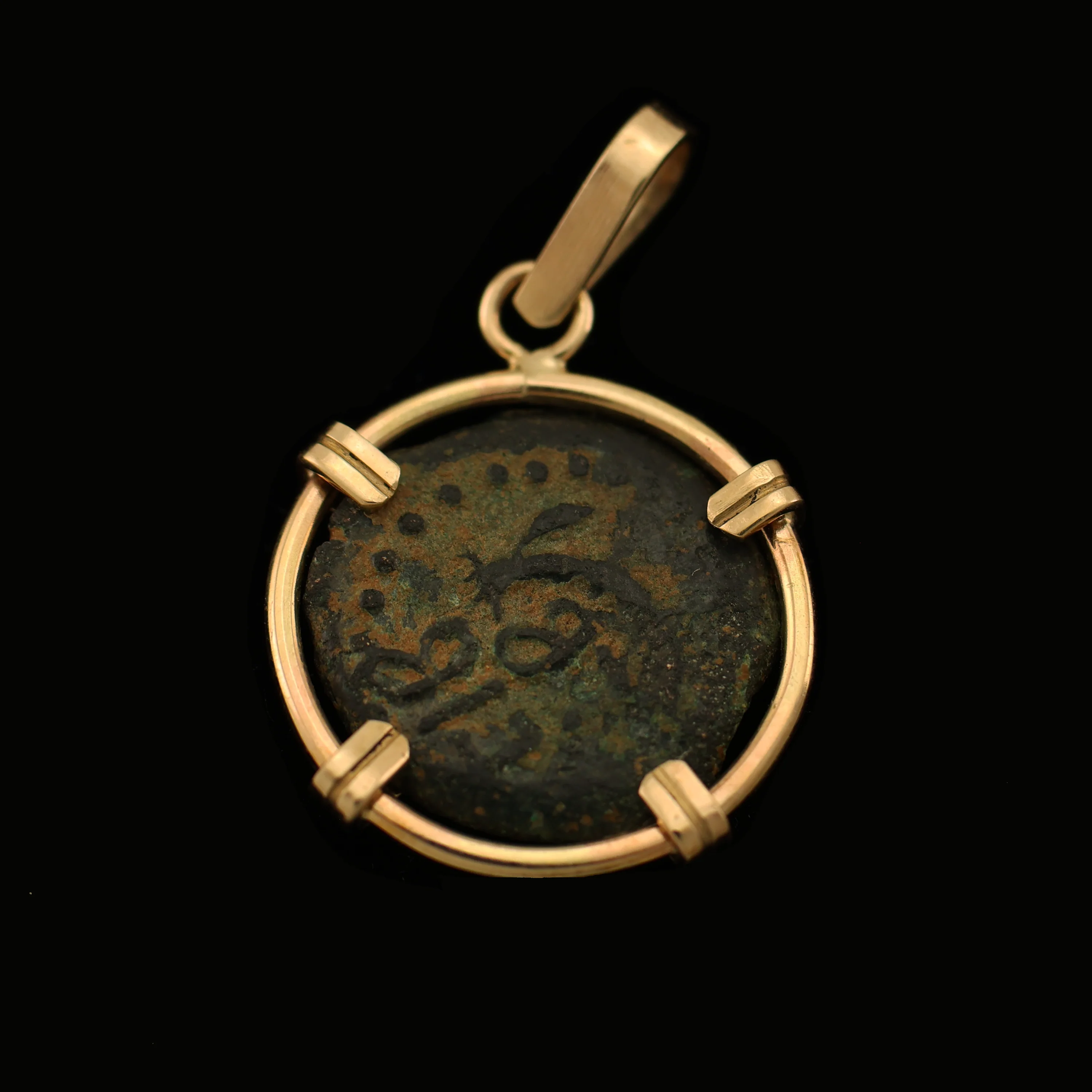
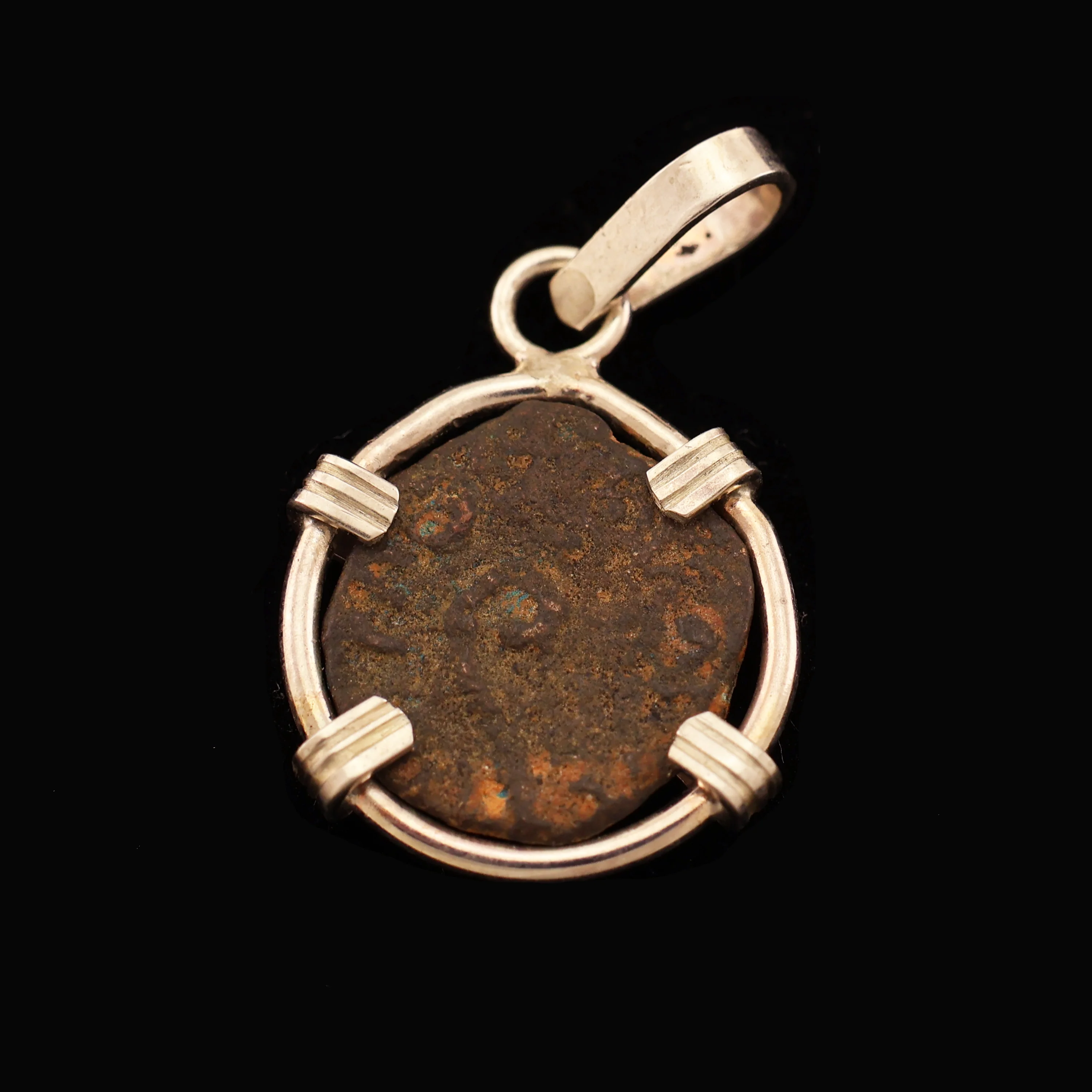
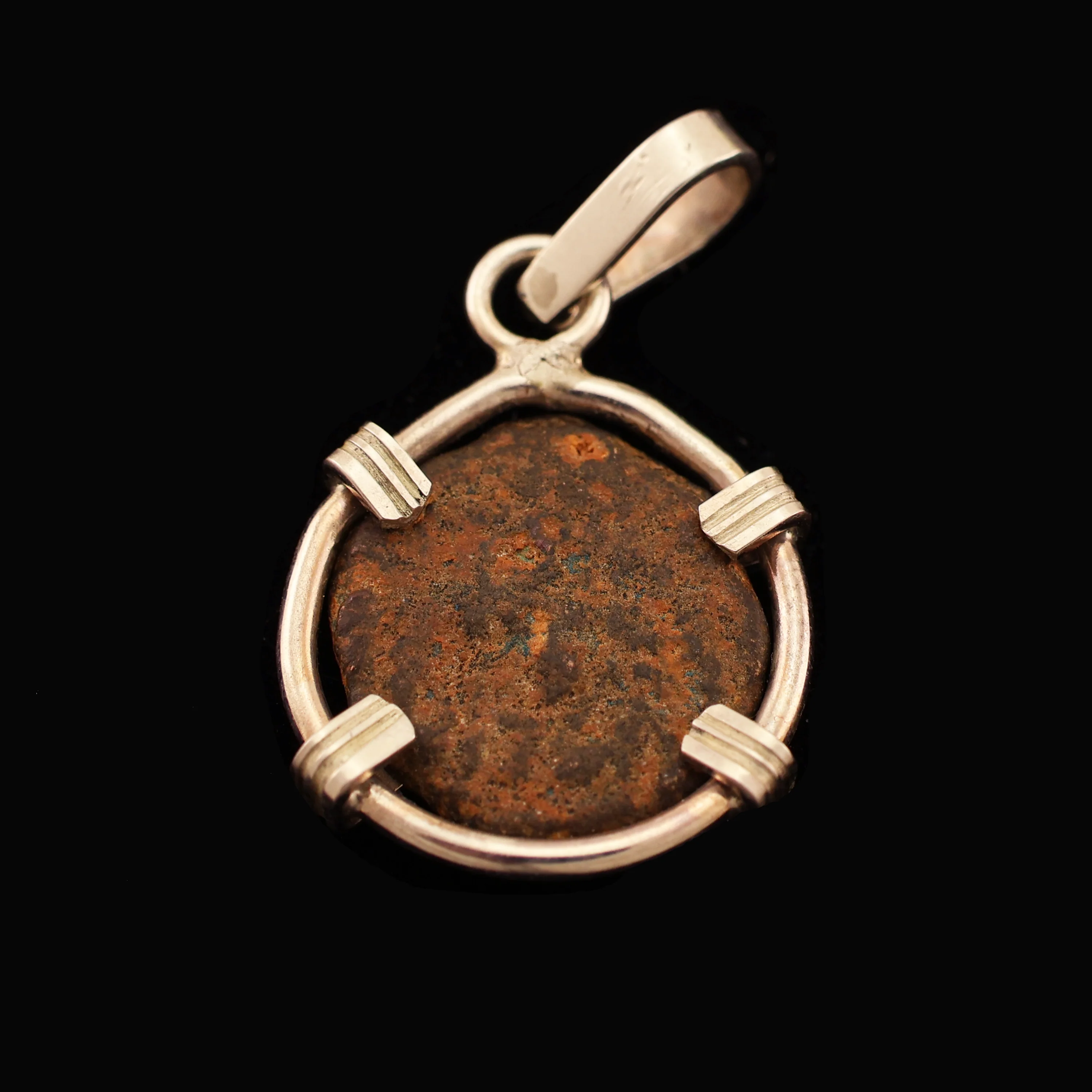
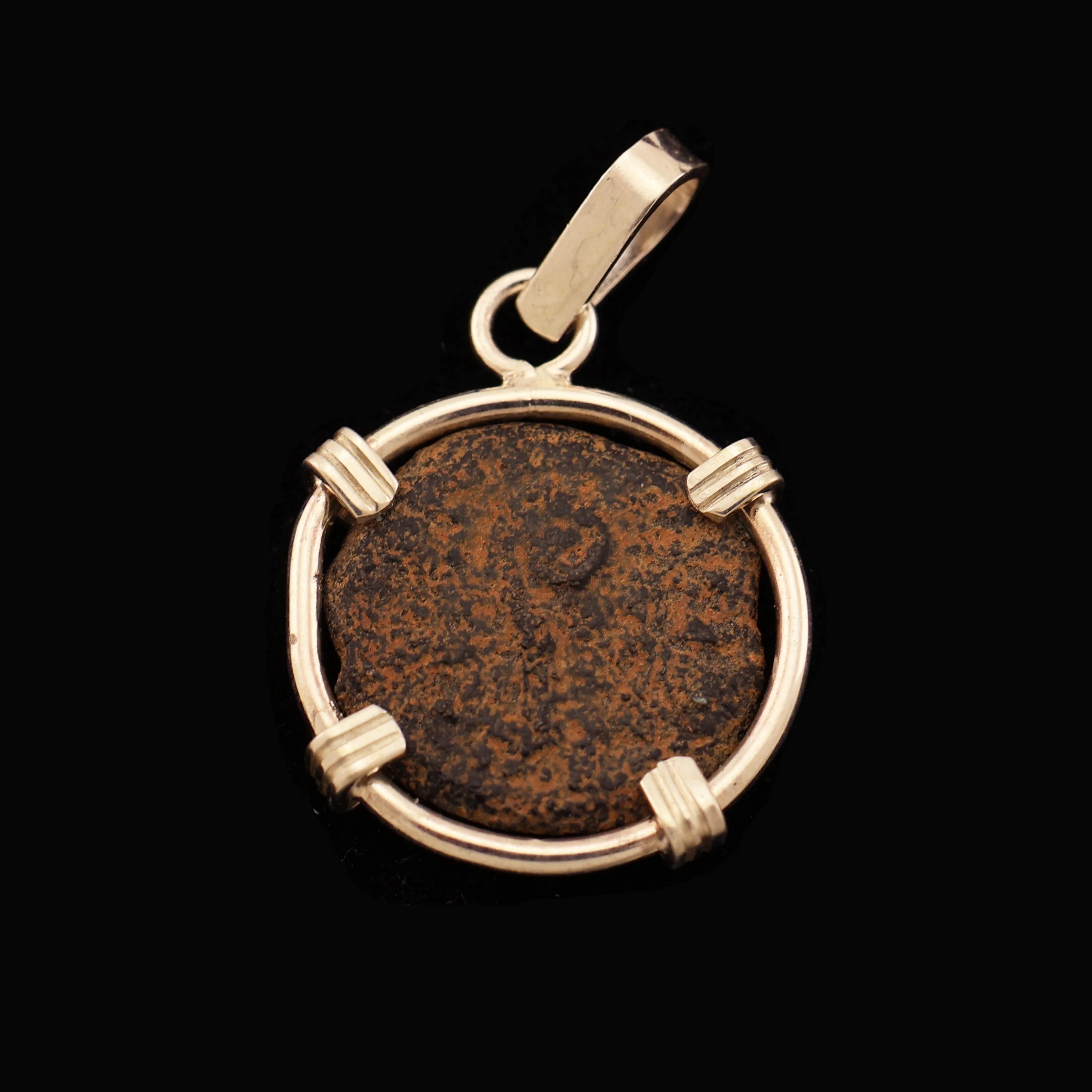
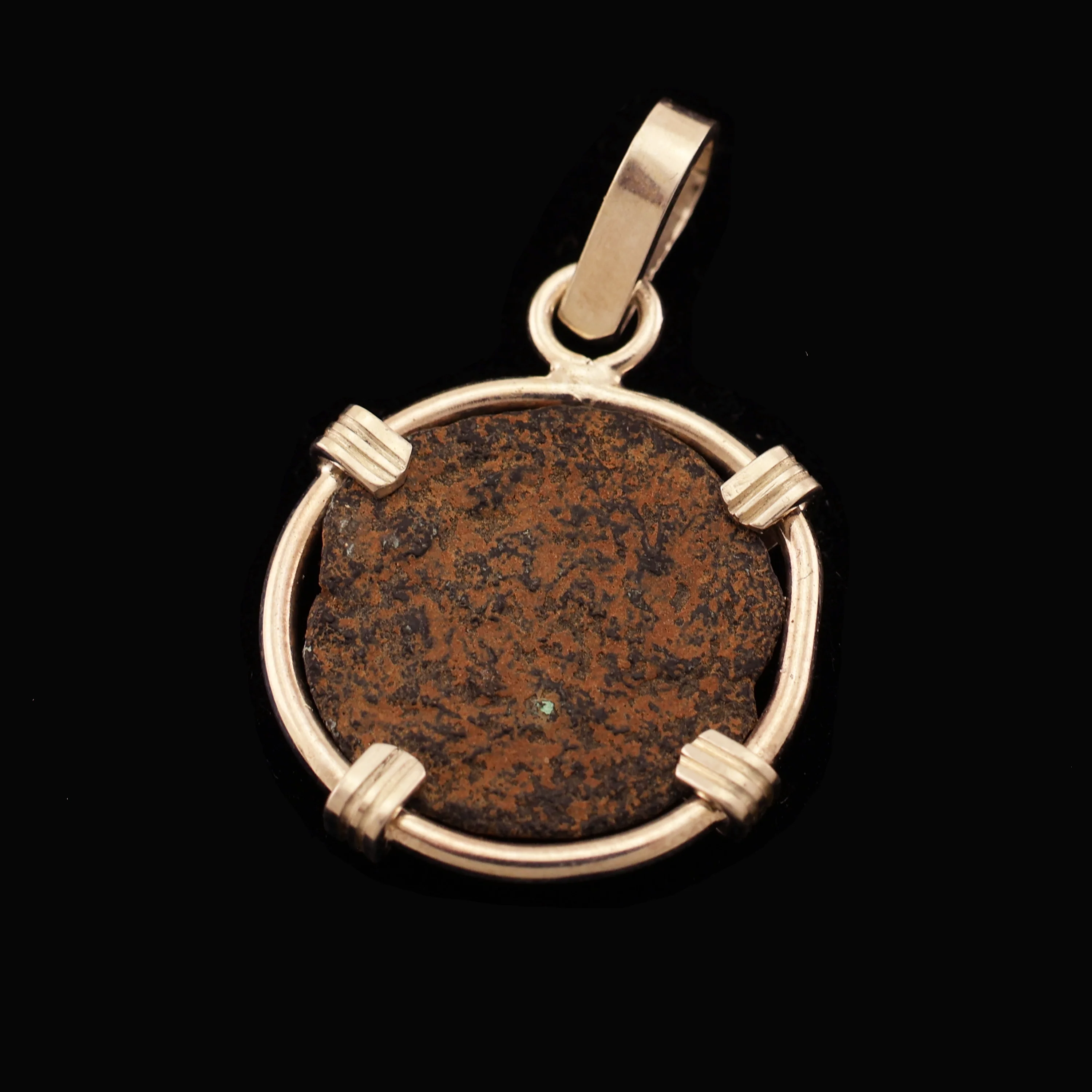
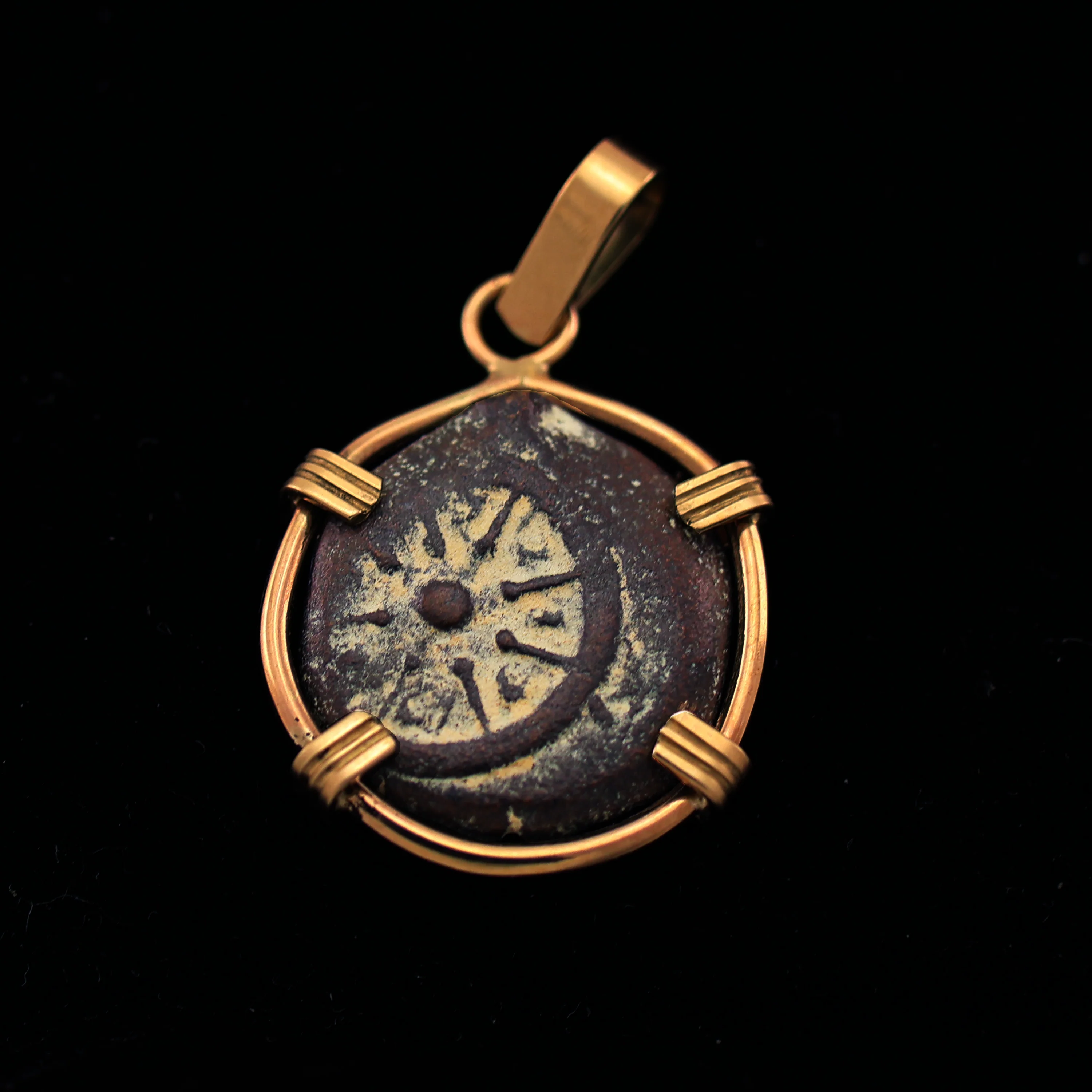
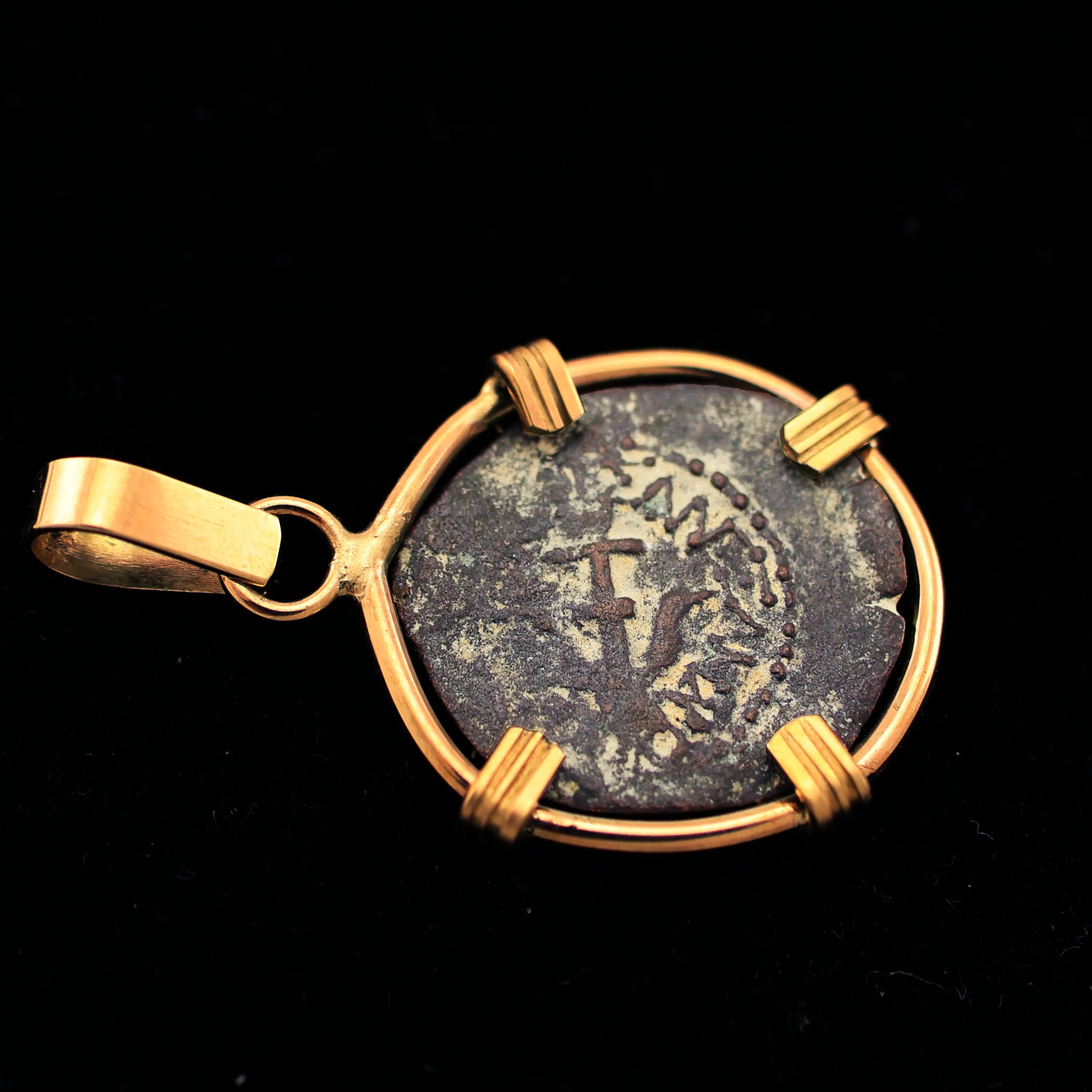
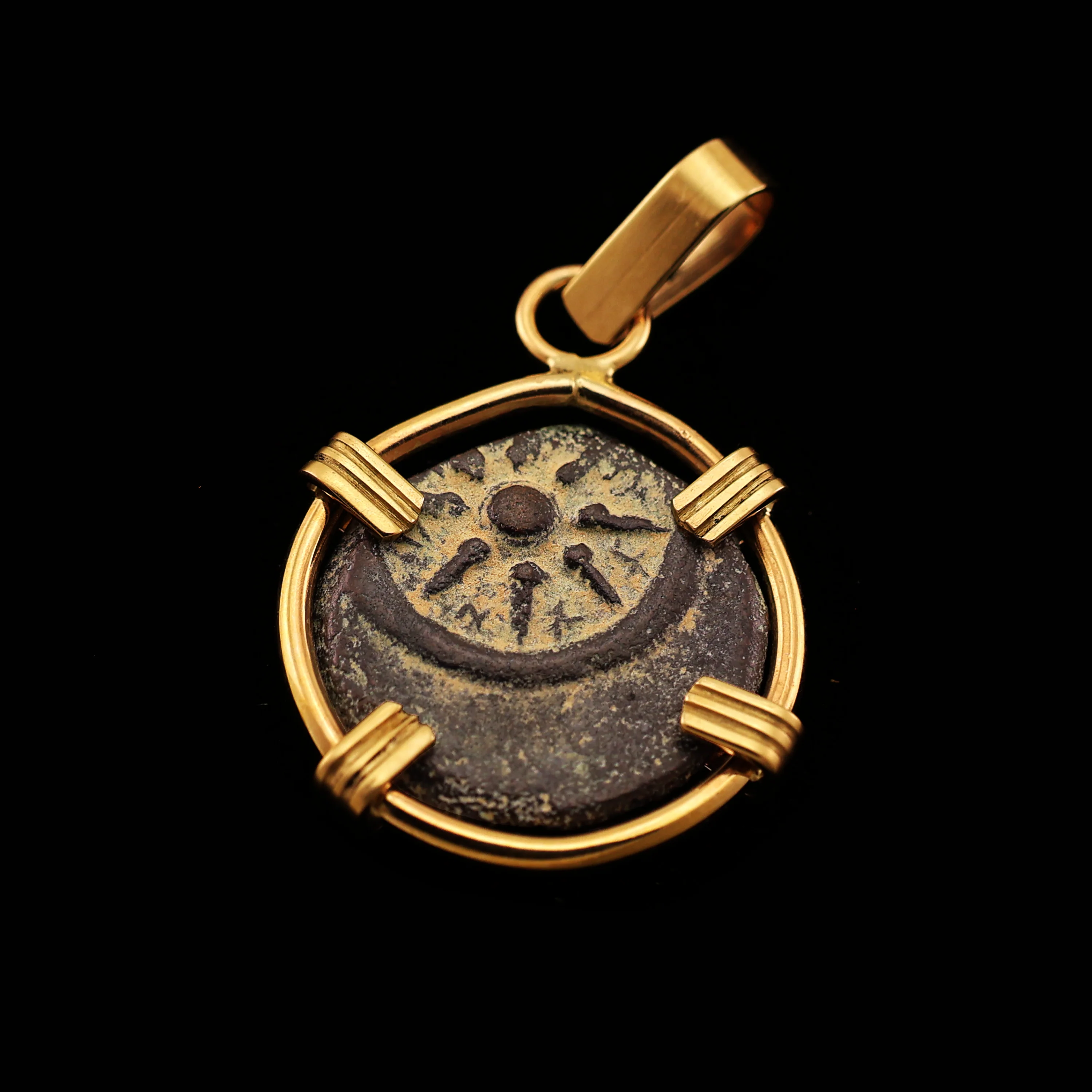
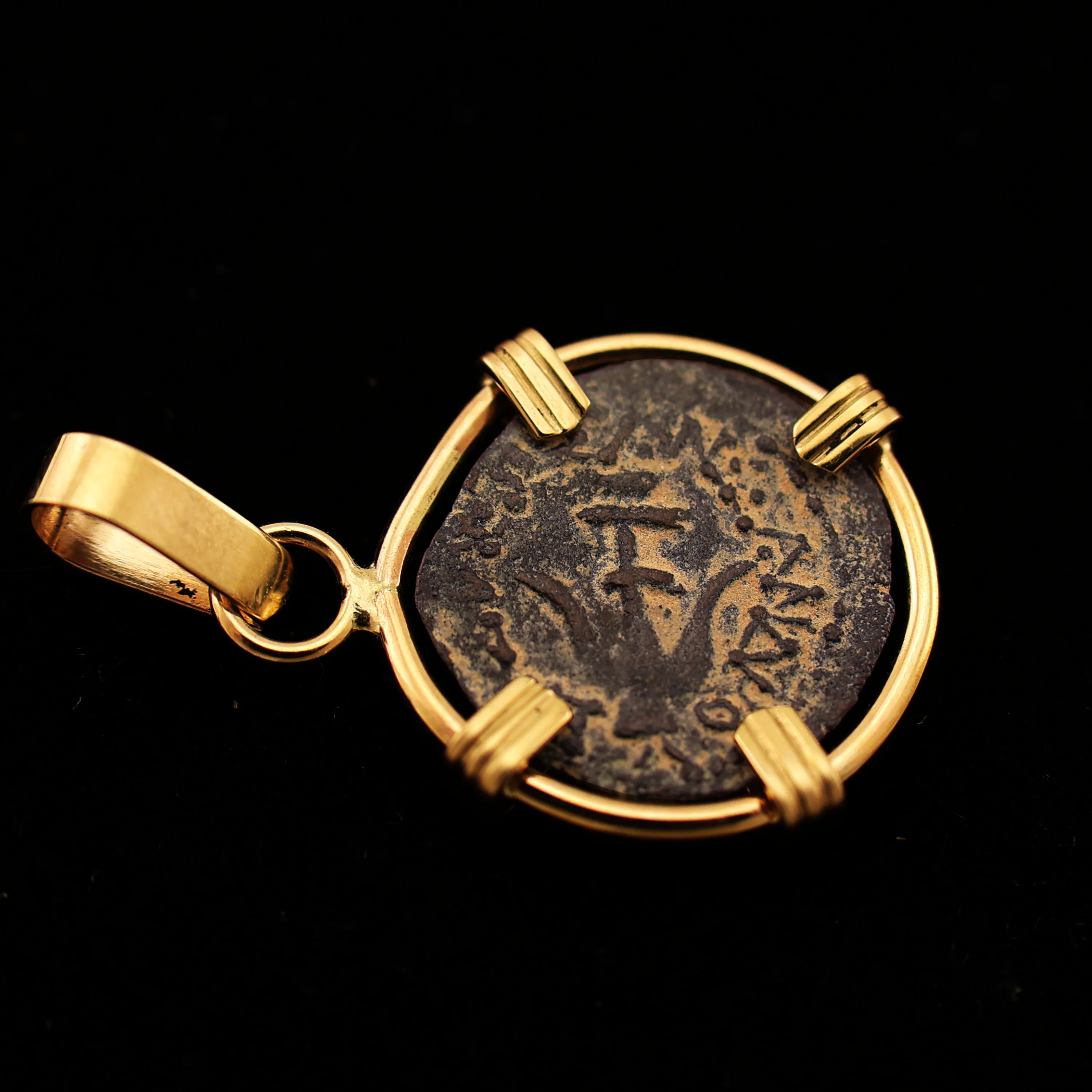
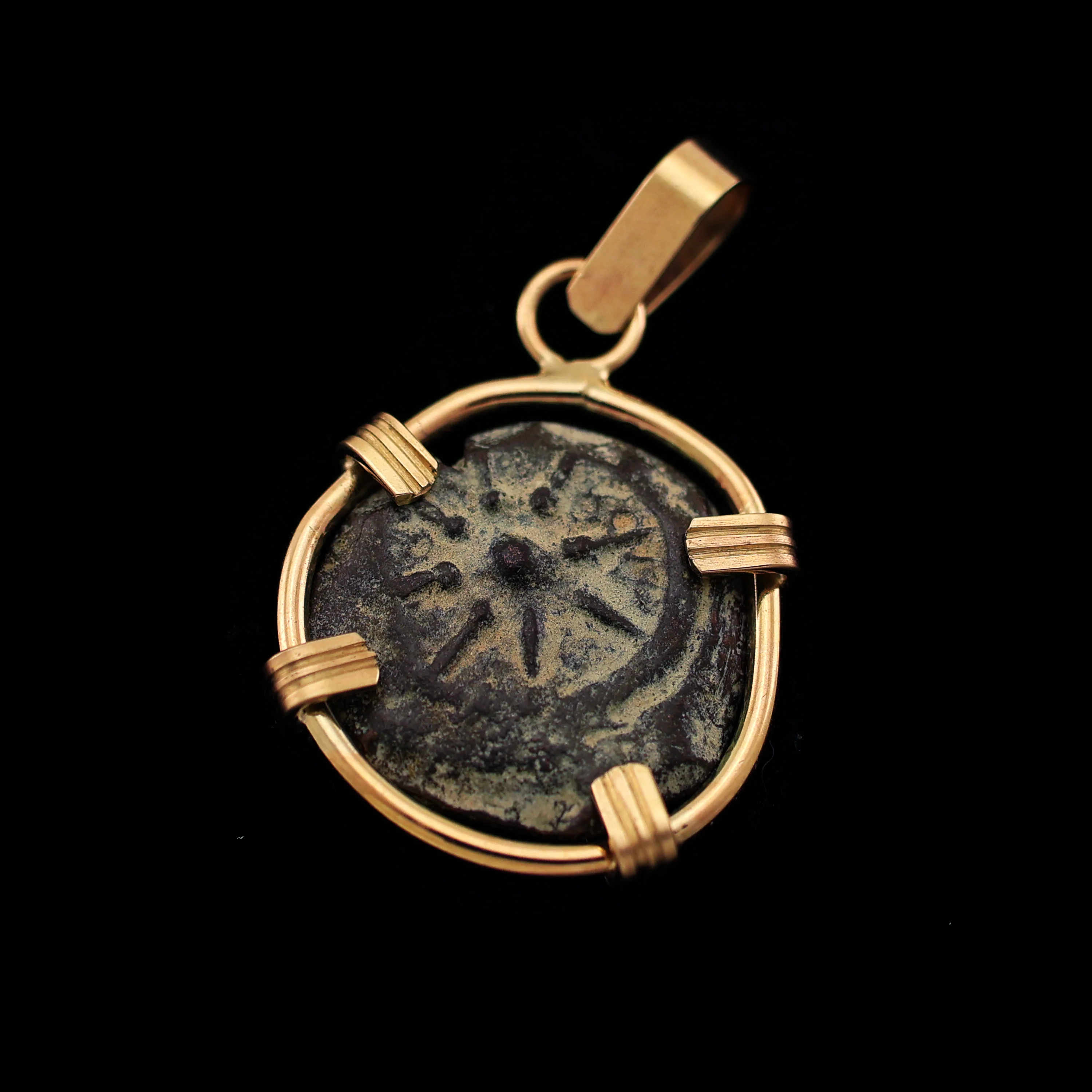
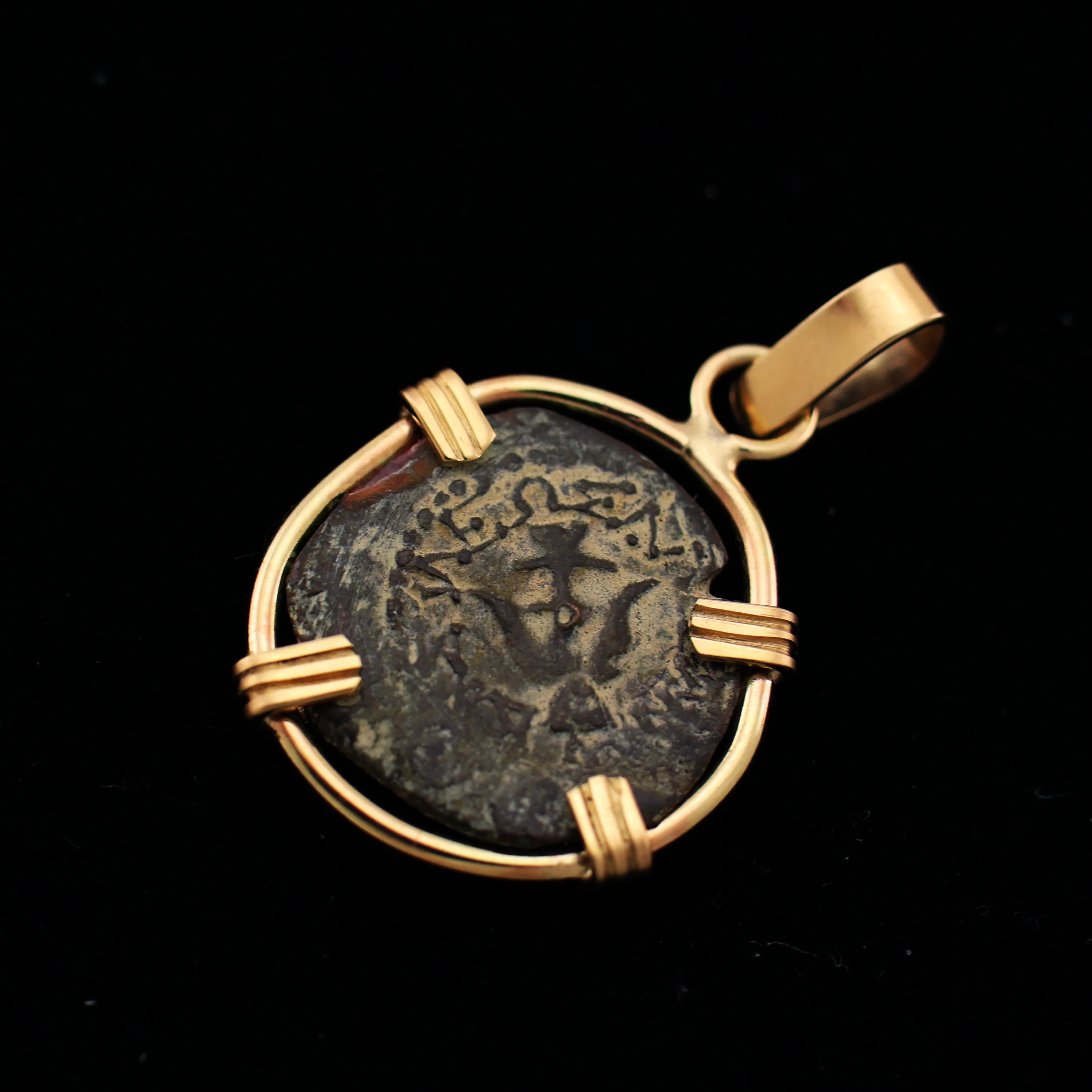
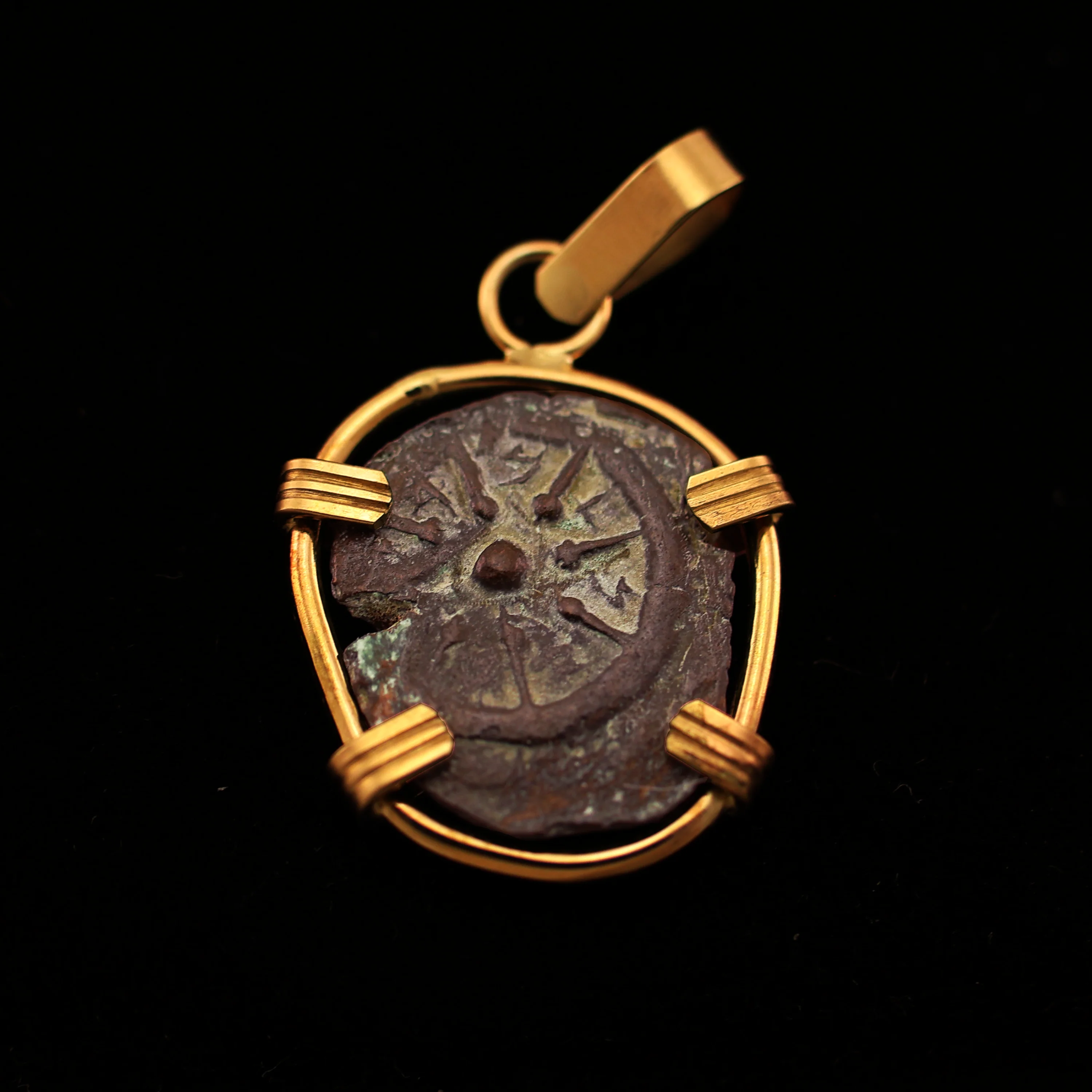
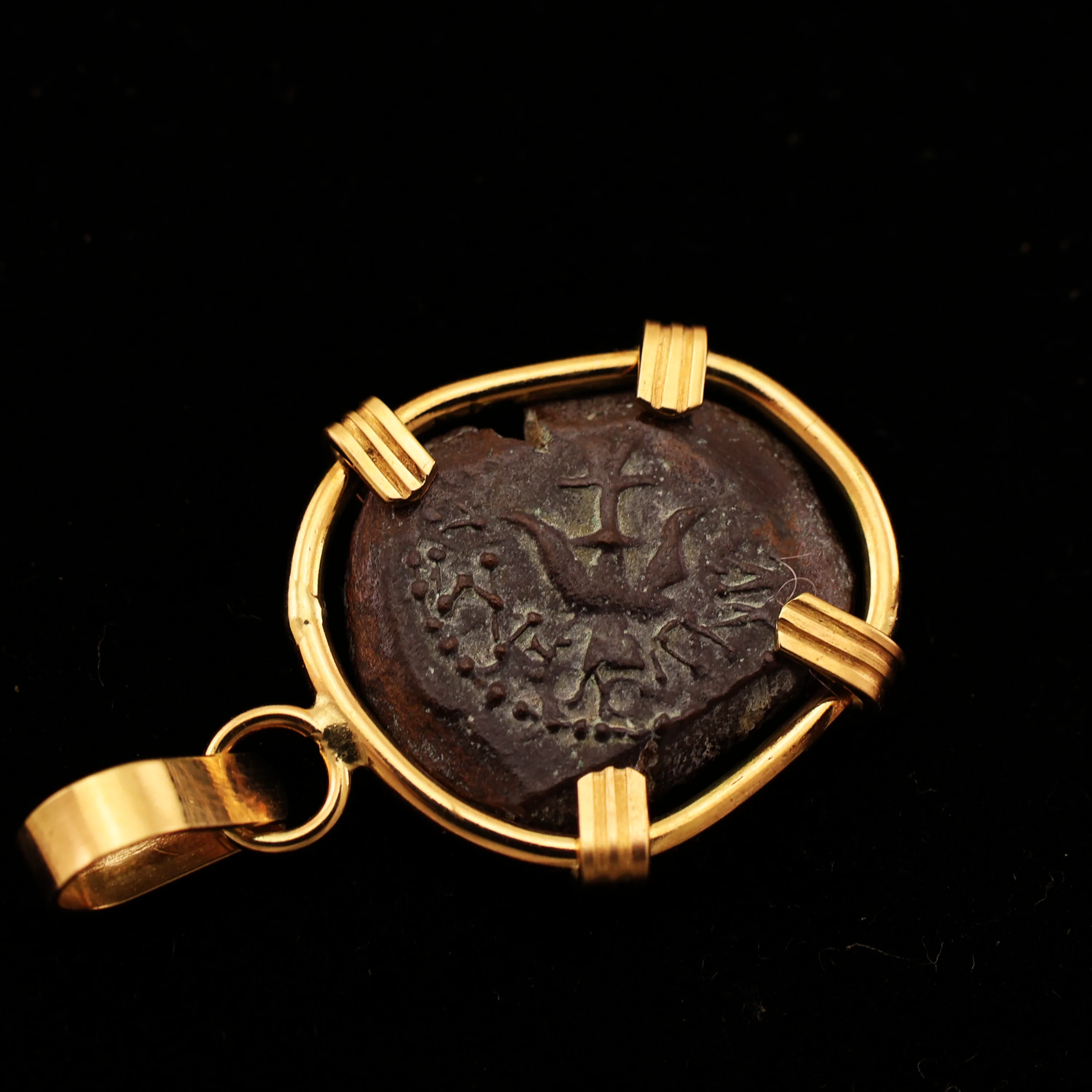
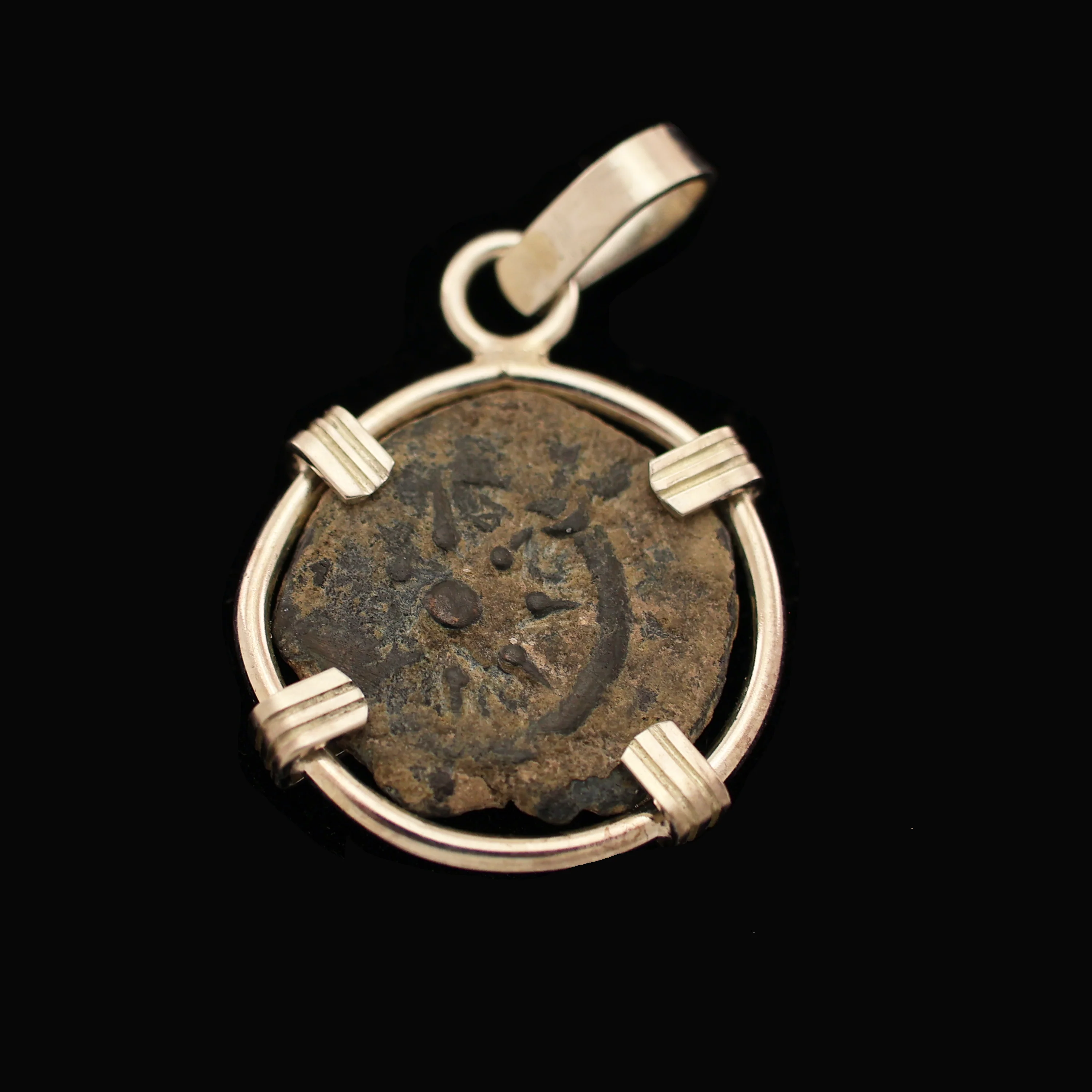
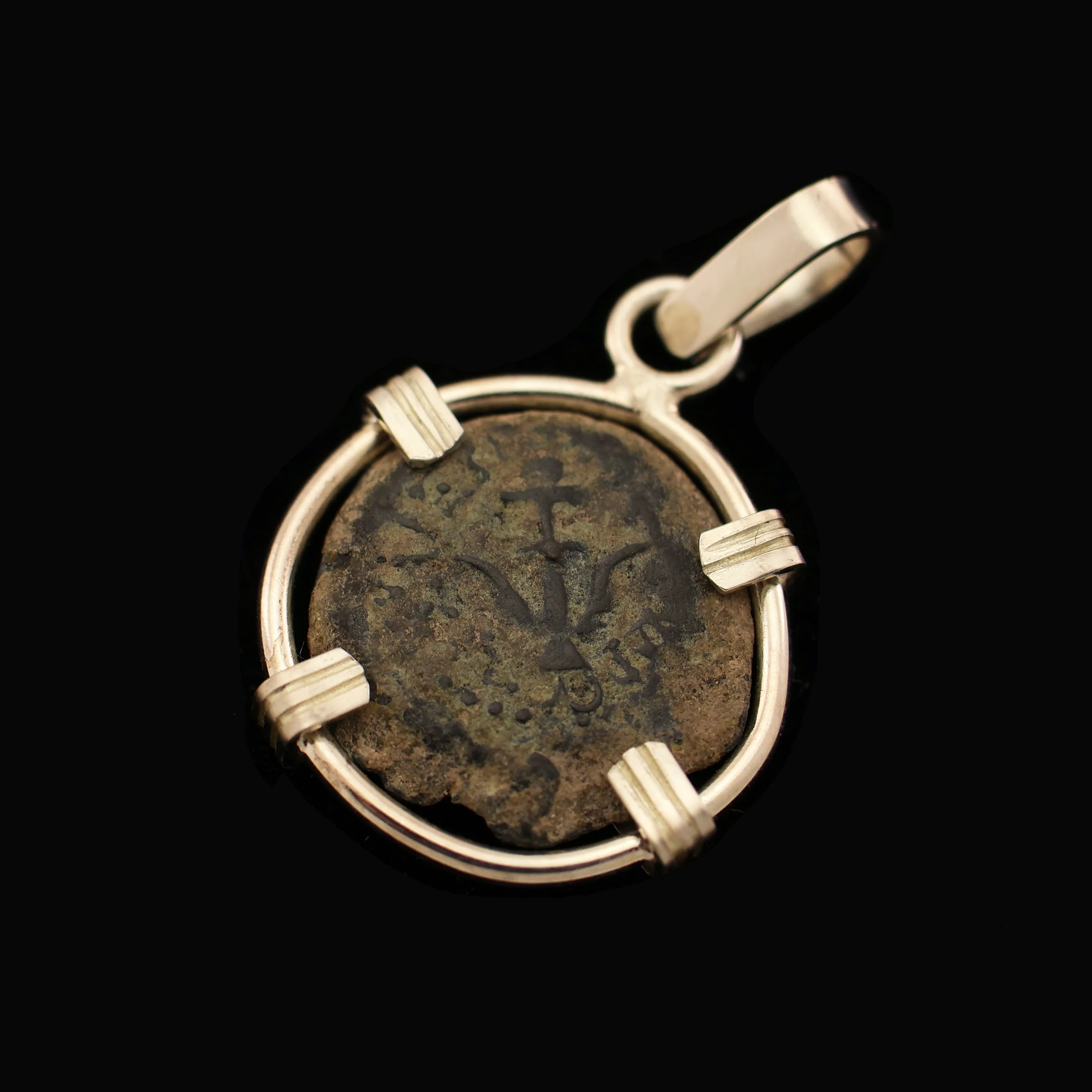
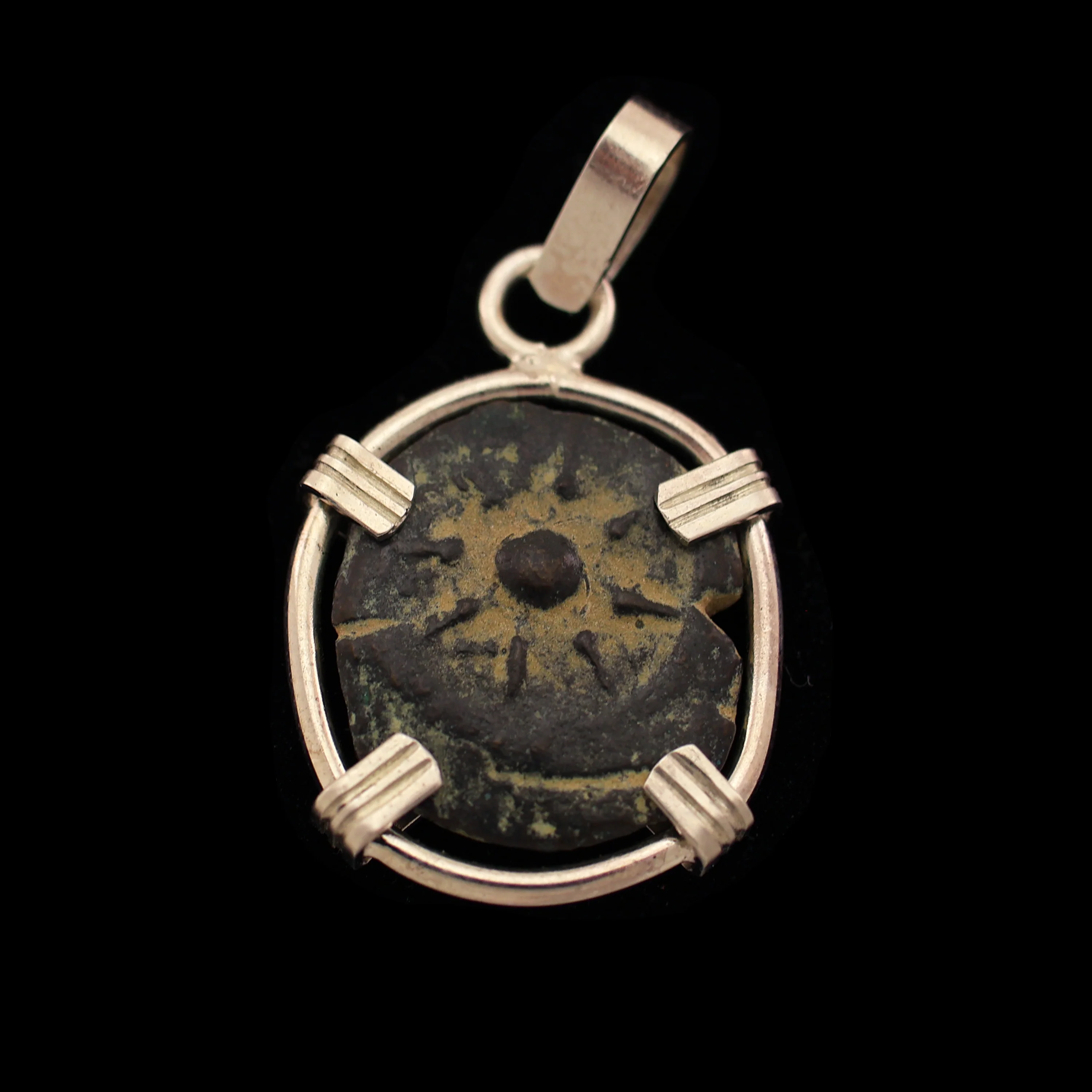
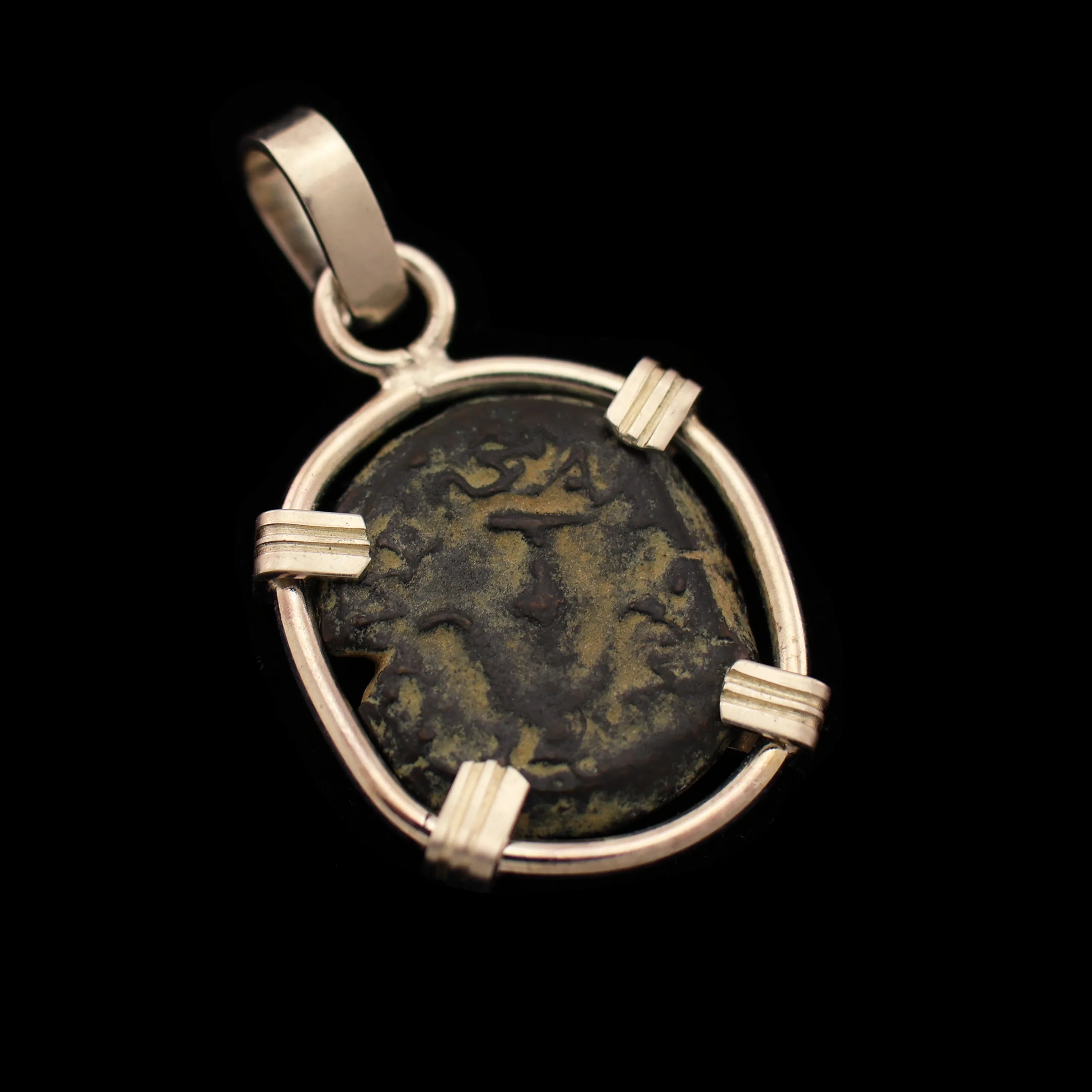
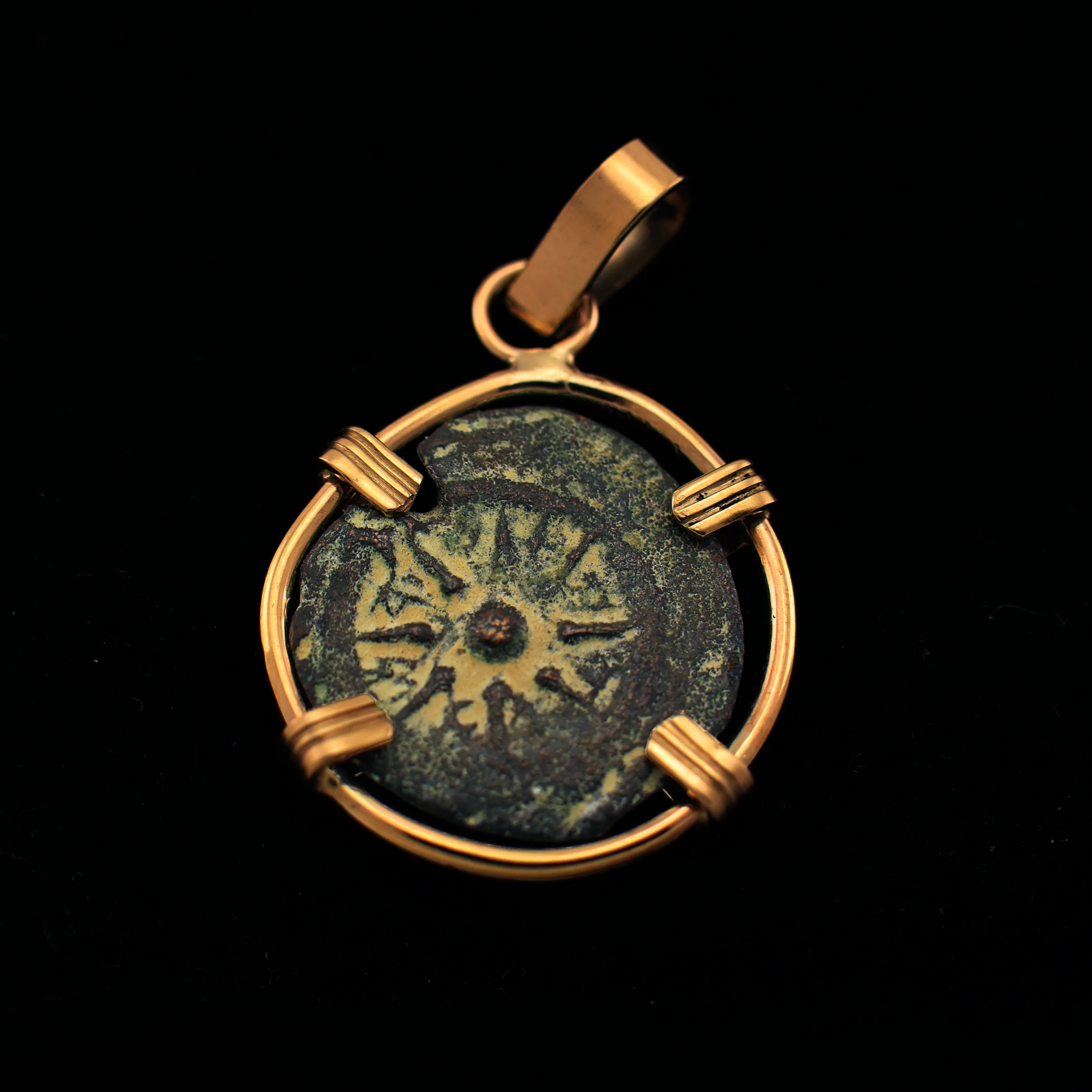
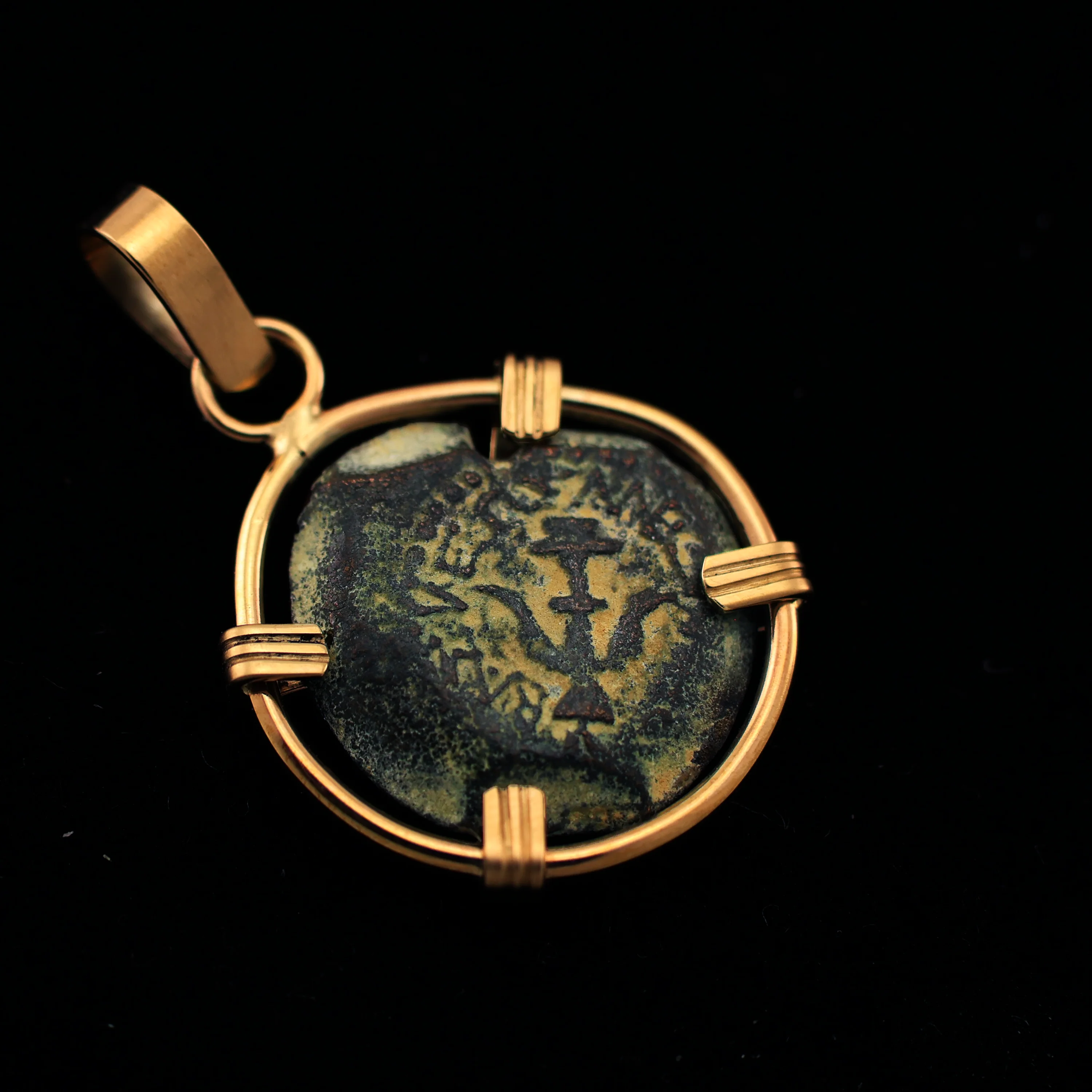
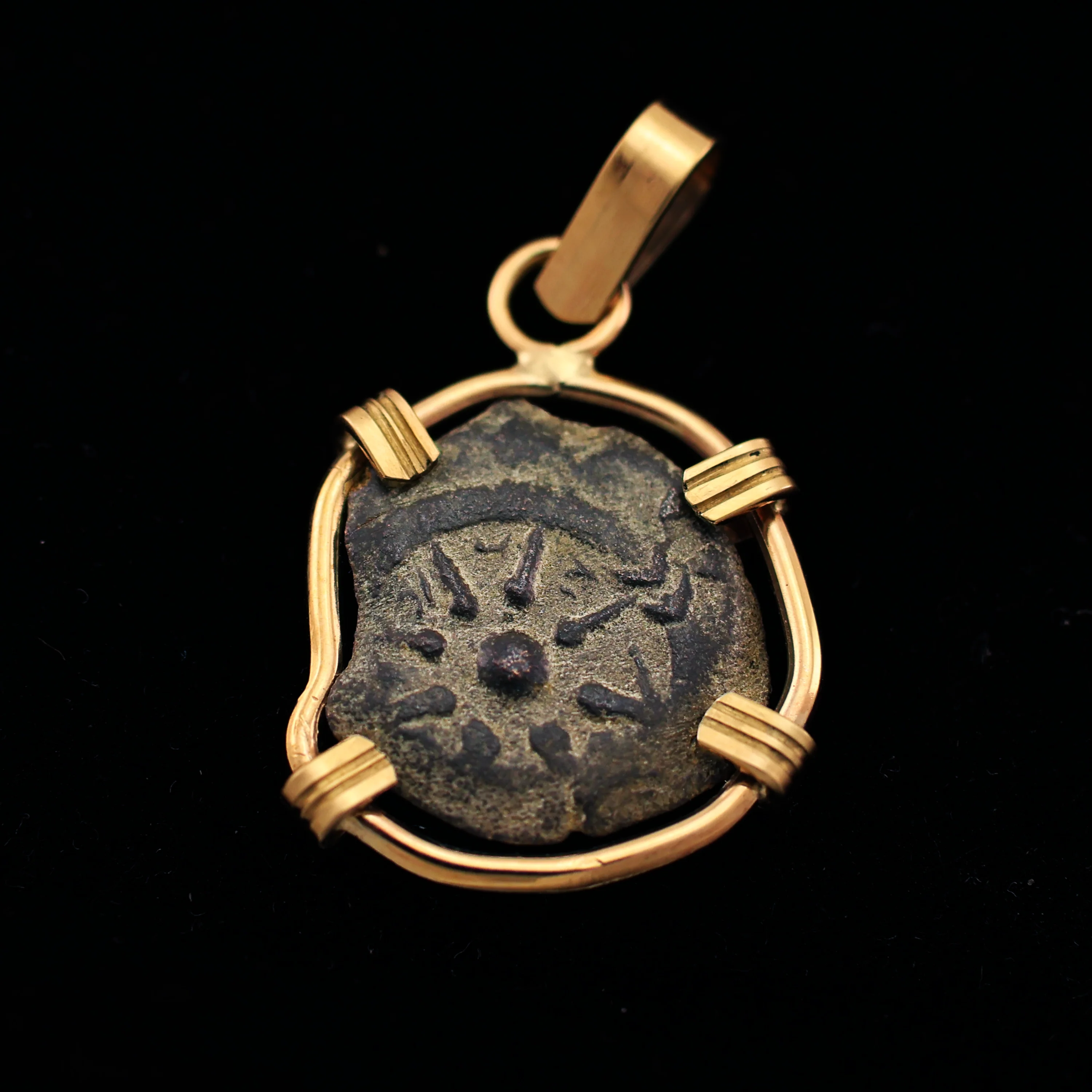
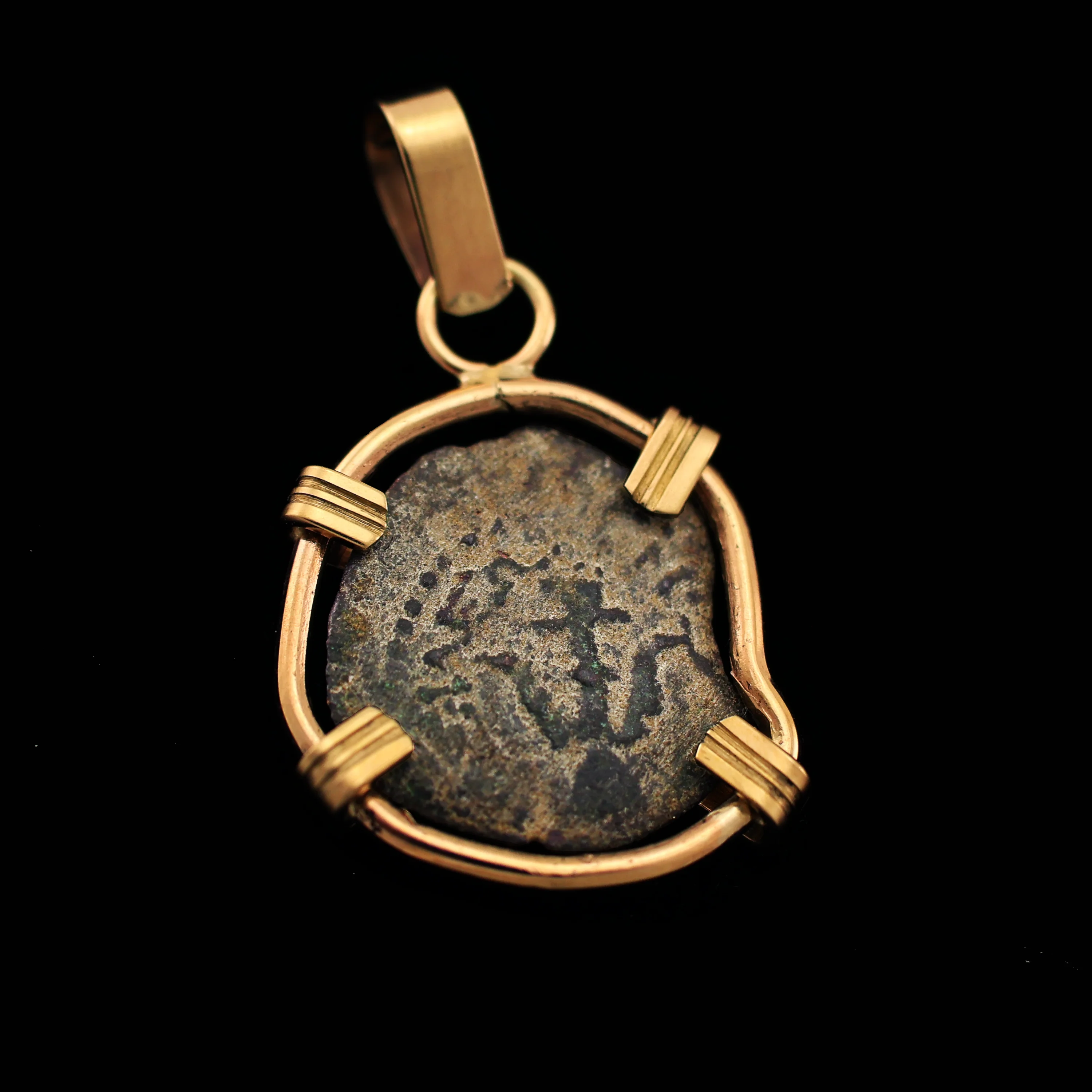
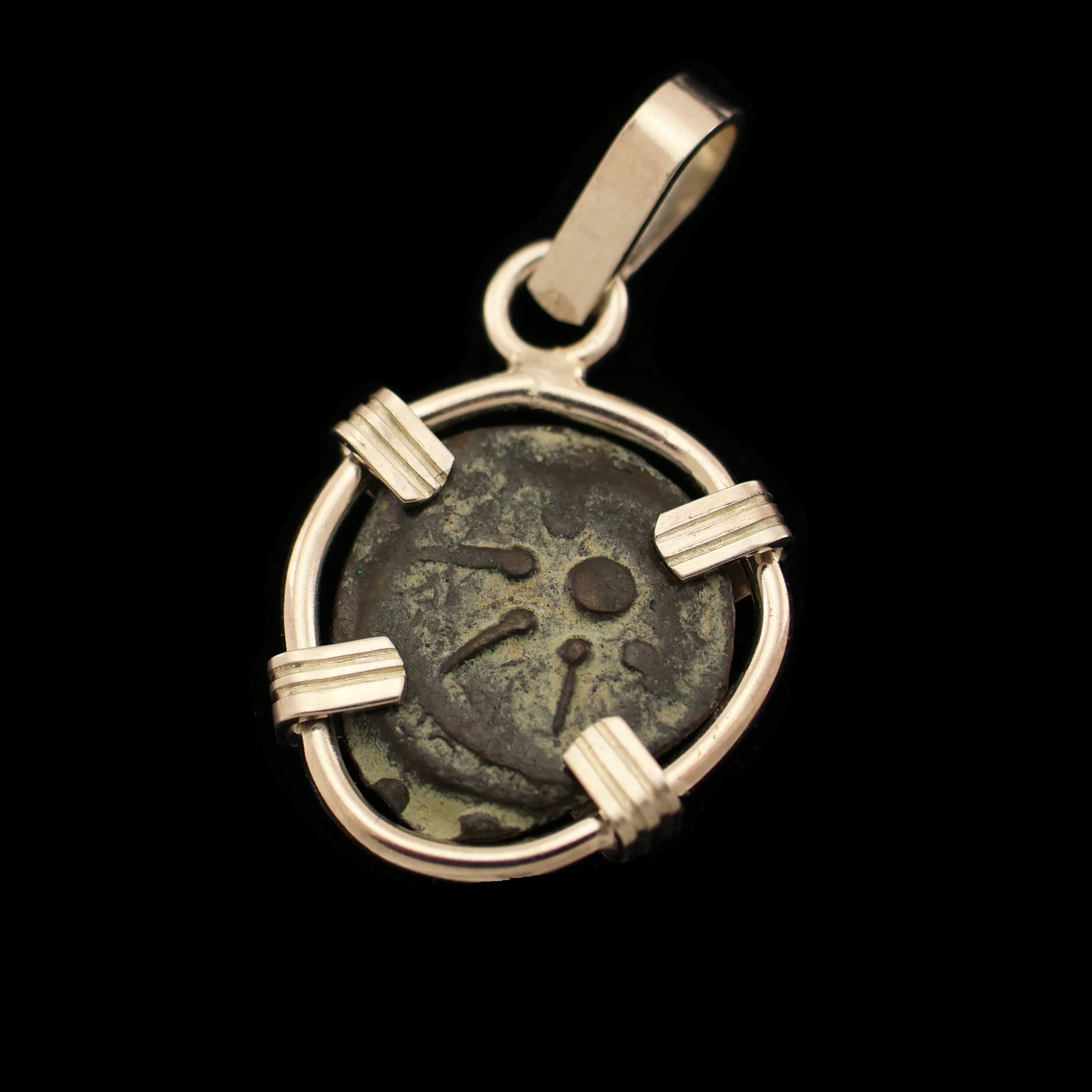
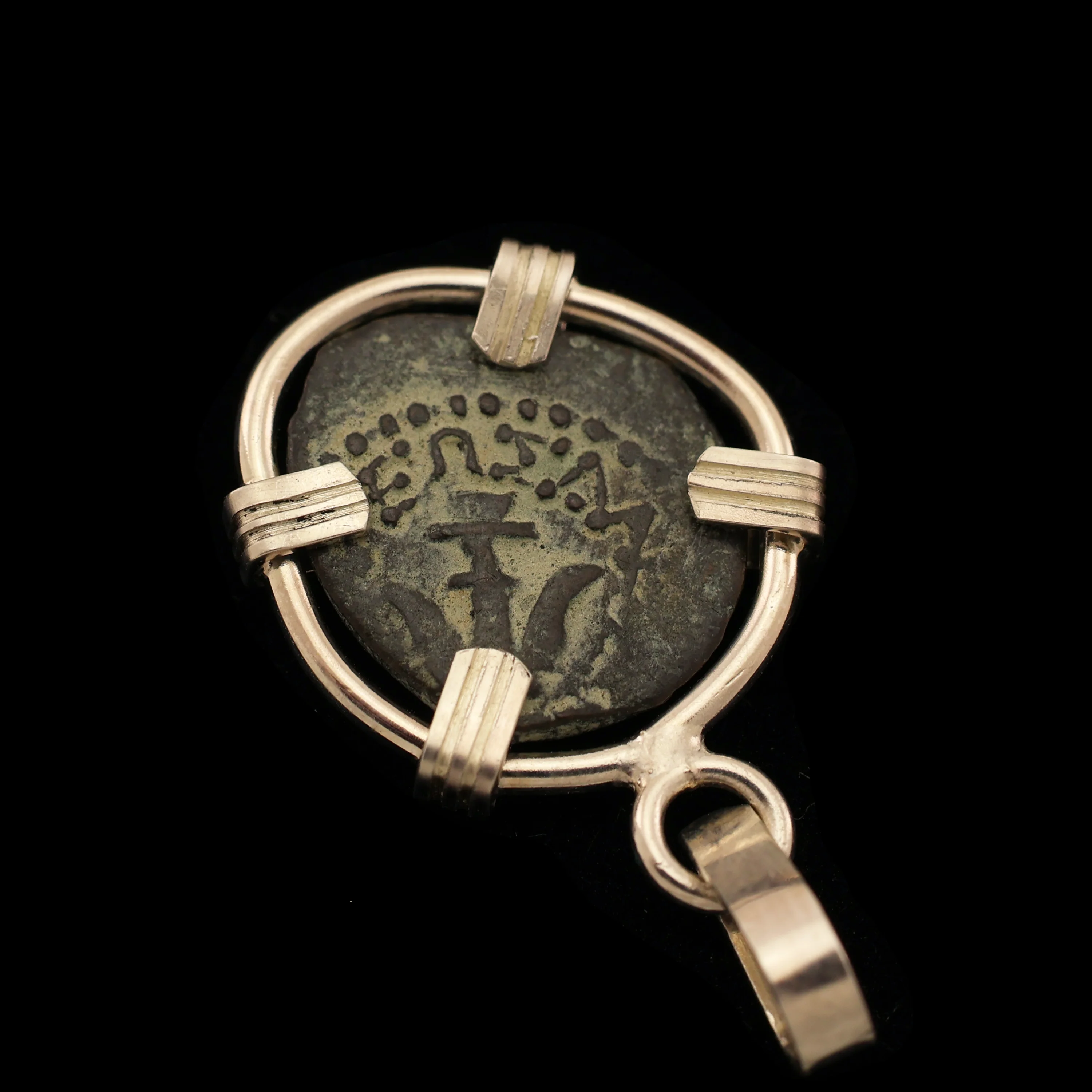
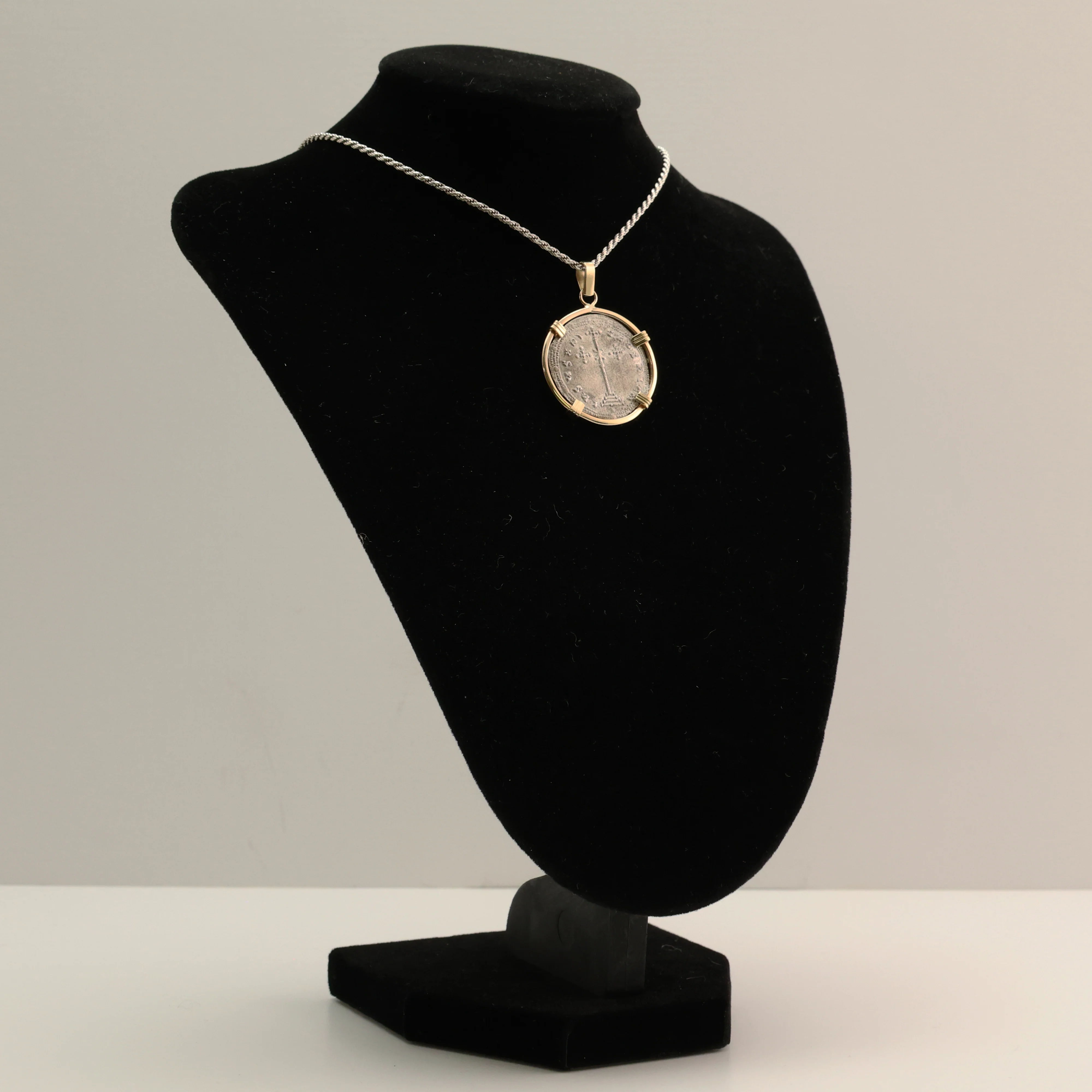
Byzantine Christian Cross Coin Pendant
Coin: Silver Miliaresion
Obverse: Cross Set on three steps
Date: c. 10th Century A.D.
Bezel: 14k Gold
Weight: 5.23 g
Diameter: 27 mm / 1.06 inches
Description
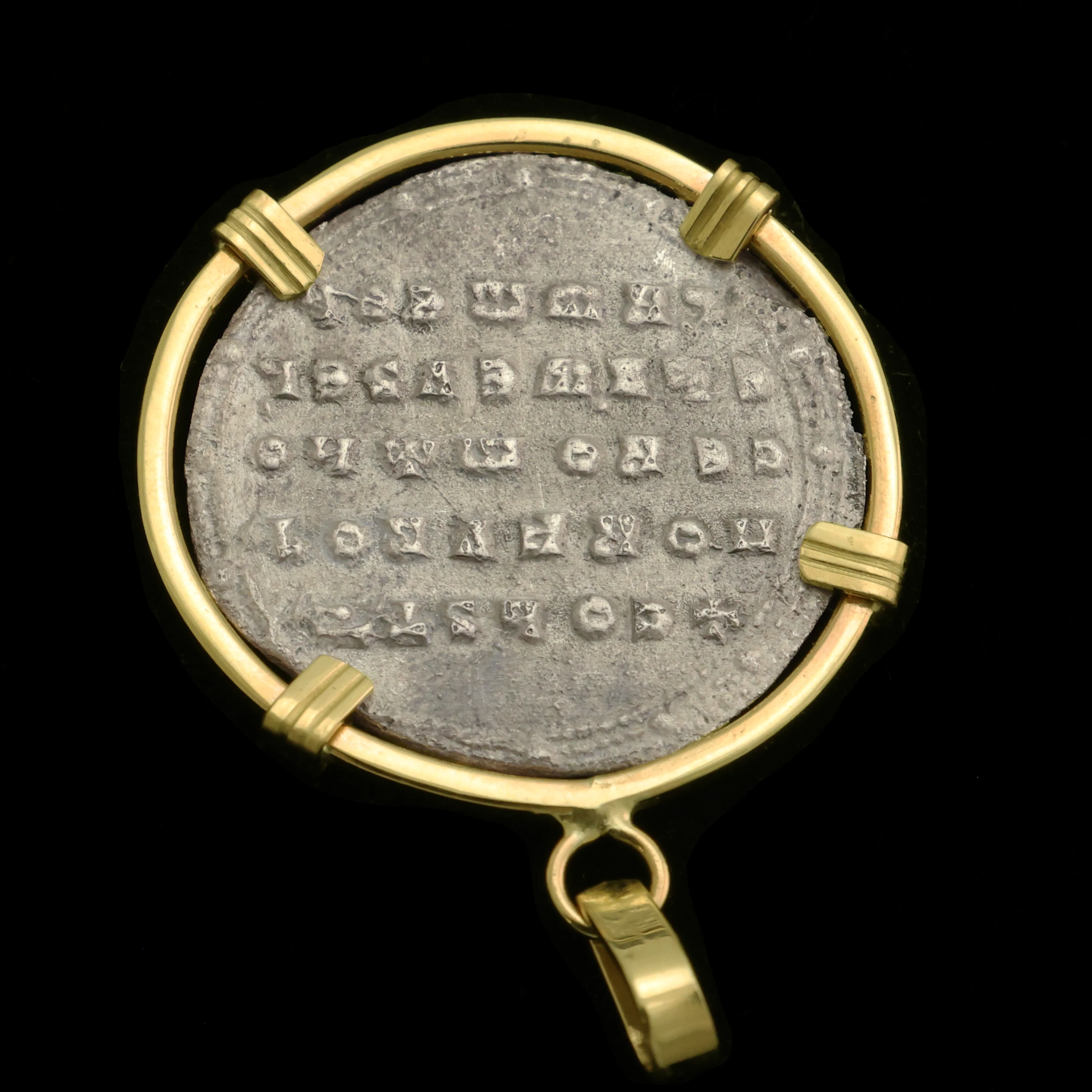
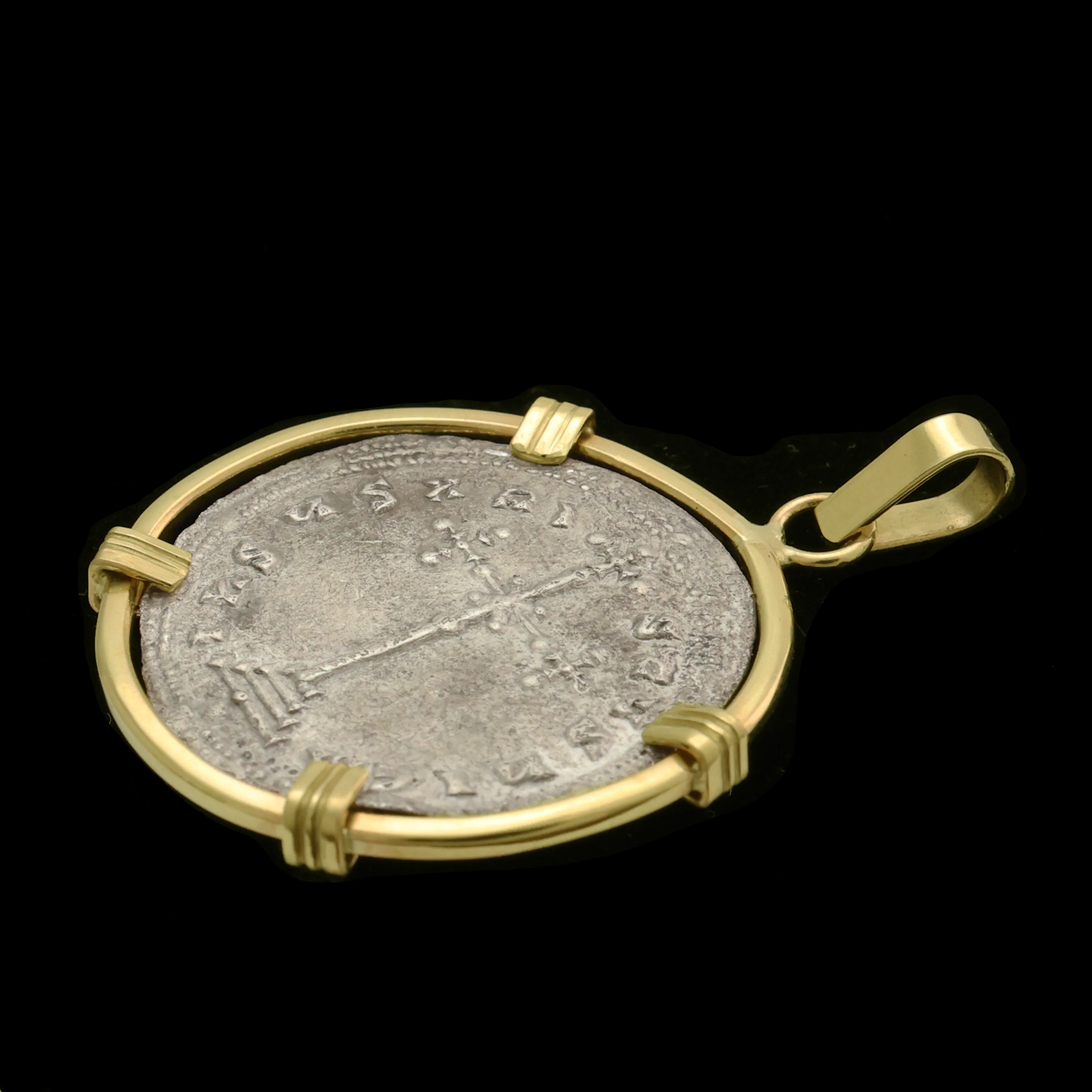
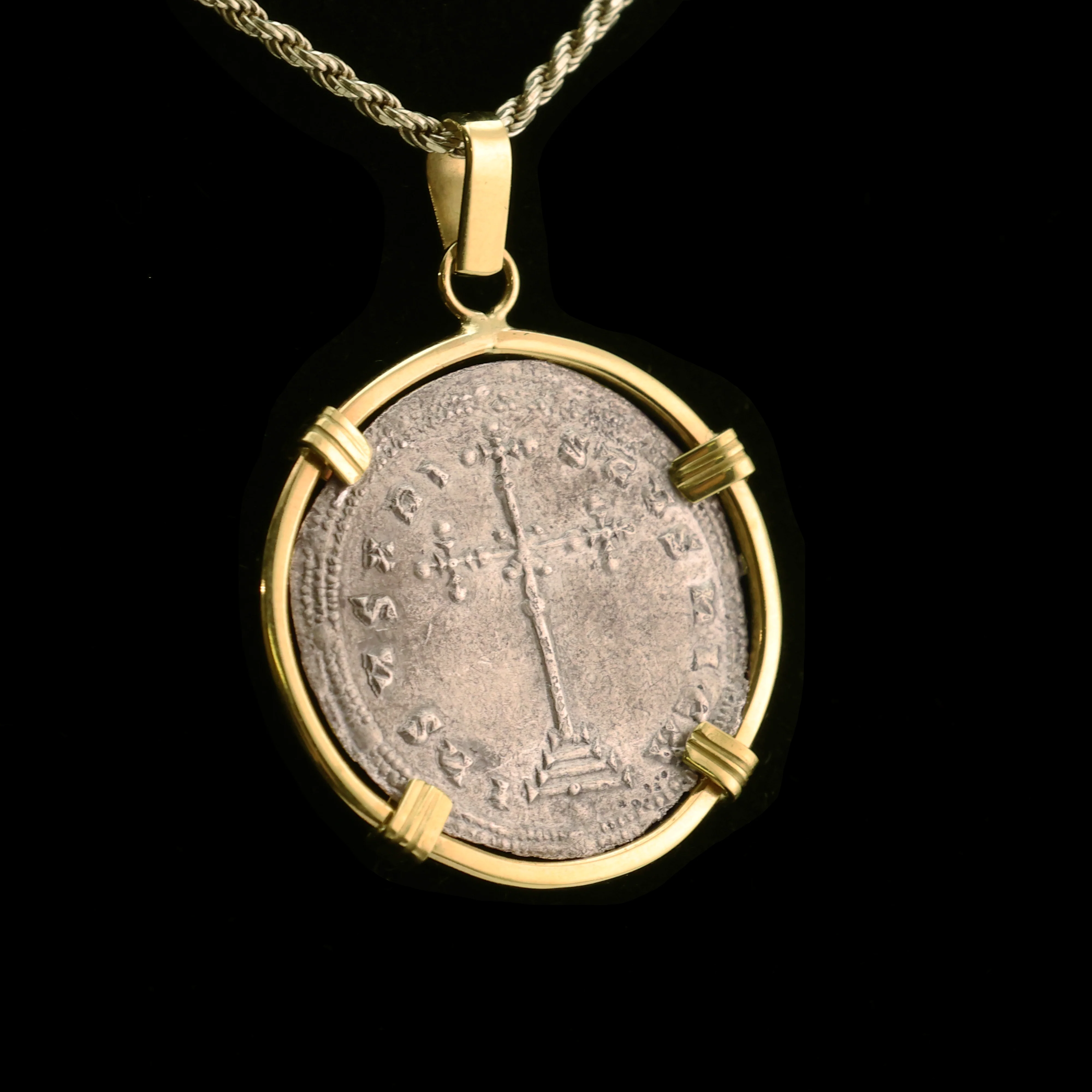
This item is an authentic Byzantine Empire coin, placed in a handmade bezel of 14 karat gold. There is only 1 of this item; you will receive the exact pendant shown in the photos.
Chain necklaces can be purchased separately through this link.
History of the Artifact
The silver miliaresion was a Byzantine coin introduced in the early 10th century and struck for several centuries as part of the empire’s refined and deeply symbolic monetary system. It was a thin, broad silver piece—roughly equivalent to a Western denier or Islamic dirham—and often served both as currency and as a statement of imperial faith. One of the most striking and enduring designs of the miliaresion features a cross on steps on its obverse, replacing the traditional portrait of the emperor. This design marked a profound shift in Byzantine iconography, emphasizing Christian symbolism over imperial likeness, especially during and after the period of Iconoclasm when the depiction of holy figures was contested.
The cross design typically shows a tall cross mounted on a series of steps, sometimes accompanied by inscriptions such as “IhSUS XRISTUS NIKA” (“Jesus Christ conquers”) or imperial titles naming the reigning emperor. Coins of this type were issued by rulers including Leo III, Constantine V, Theophilus, and later emperors like Basil I and Romanus I Lecapenus. They were minted primarily in Constantinople and circulated widely throughout the empire and neighboring regions, often serving as a model for later medieval coinage in Europe. The miliaresion’s elegant, reflective surface and austere cross design symbolized both the empire’s devotion to Christianity and its claim to divine legitimacy—an enduring message of faith struck in silver.
Authenticity
Ancient Artifacts guarantees the Authenticity of items sold through a three layer system of protection:
- Ancient Artifacts exclusively sources artifacts from trusted and reputable antique distributors, many of whom have been selling Artifacts for decades.
- Next, the Artifact is inspected by an expert team member, who is professionally trained in counterfeit detection After the artifact passes inspection, the Certificate of Authenticity is signed and the Artifact is packaged.
- Finally, Ancient Artifacts gives an additional layer of protection by promising a full refund with no questions asked, in the extremely unlikely event that a counterfeit slips through our vetting process.
Your order will include:
- Miliaresion Pendant shown in photos
- Certificate of Authenticity
Ancient Artifacts relics are guaranteed authentic and have a 100% money back policy. Read more about our Mission and Promise for authenticity.
Original: $870.00
-65%$870.00
$304.50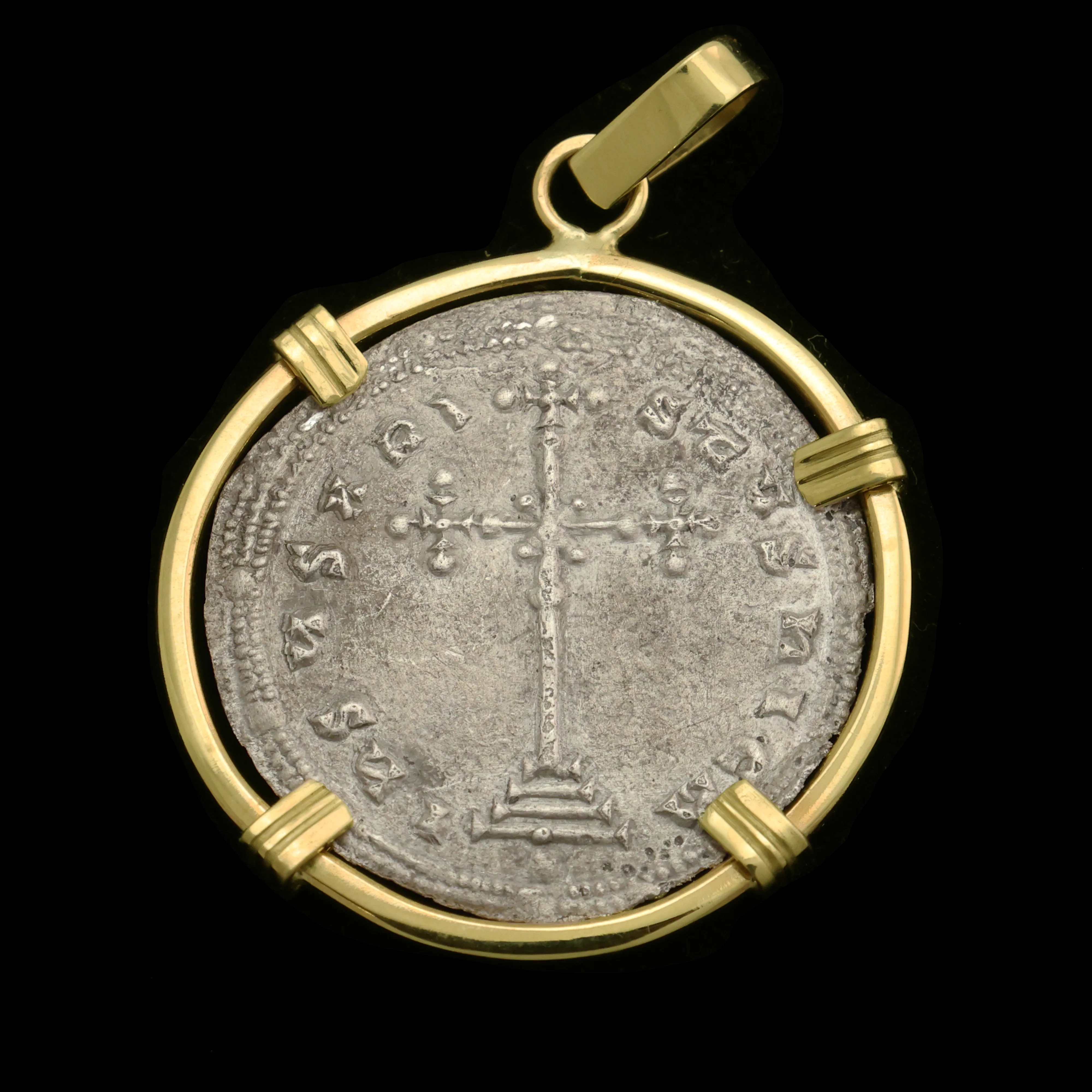
Description
Coin: Silver Miliaresion
Obverse: Cross Set on three steps
Date: c. 10th Century A.D.
Bezel: 14k Gold
Weight: 5.23 g
Diameter: 27 mm / 1.06 inches
Description
This item is an authentic Byzantine Empire coin, placed in a handmade bezel of 14 karat gold. There is only 1 of this item; you will receive the exact pendant shown in the photos.
Chain necklaces can be purchased separately through this link.
History of the Artifact
The silver miliaresion was a Byzantine coin introduced in the early 10th century and struck for several centuries as part of the empire’s refined and deeply symbolic monetary system. It was a thin, broad silver piece—roughly equivalent to a Western denier or Islamic dirham—and often served both as currency and as a statement of imperial faith. One of the most striking and enduring designs of the miliaresion features a cross on steps on its obverse, replacing the traditional portrait of the emperor. This design marked a profound shift in Byzantine iconography, emphasizing Christian symbolism over imperial likeness, especially during and after the period of Iconoclasm when the depiction of holy figures was contested.
The cross design typically shows a tall cross mounted on a series of steps, sometimes accompanied by inscriptions such as “IhSUS XRISTUS NIKA” (“Jesus Christ conquers”) or imperial titles naming the reigning emperor. Coins of this type were issued by rulers including Leo III, Constantine V, Theophilus, and later emperors like Basil I and Romanus I Lecapenus. They were minted primarily in Constantinople and circulated widely throughout the empire and neighboring regions, often serving as a model for later medieval coinage in Europe. The miliaresion’s elegant, reflective surface and austere cross design symbolized both the empire’s devotion to Christianity and its claim to divine legitimacy—an enduring message of faith struck in silver.
Authenticity
Ancient Artifacts guarantees the Authenticity of items sold through a three layer system of protection:
- Ancient Artifacts exclusively sources artifacts from trusted and reputable antique distributors, many of whom have been selling Artifacts for decades.
- Next, the Artifact is inspected by an expert team member, who is professionally trained in counterfeit detection After the artifact passes inspection, the Certificate of Authenticity is signed and the Artifact is packaged.
- Finally, Ancient Artifacts gives an additional layer of protection by promising a full refund with no questions asked, in the extremely unlikely event that a counterfeit slips through our vetting process.
Your order will include:
- Miliaresion Pendant shown in photos
- Certificate of Authenticity
Ancient Artifacts relics are guaranteed authentic and have a 100% money back policy. Read more about our Mission and Promise for authenticity.